
Required

Why Anxiety Makes Your Heart Race
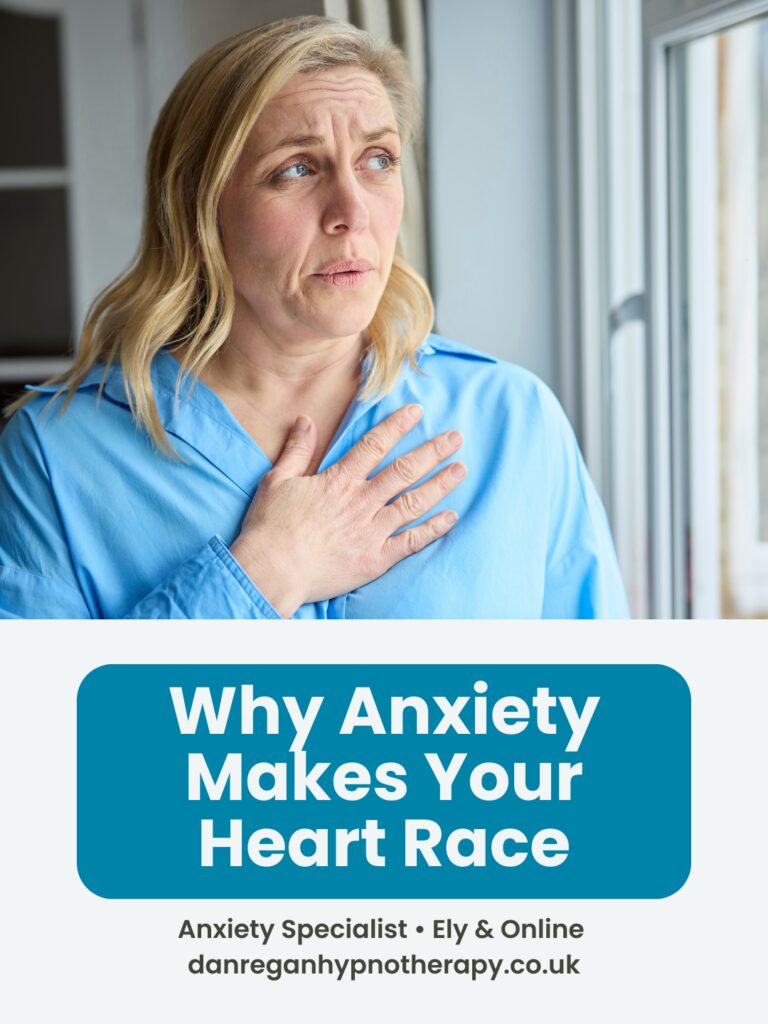
Why Anxiety Makes Your Heart Race (And Why It Isn’t Dangerous)
One of the most common physical symptoms people notice during anxiety is a racing or pounding heart.
You might be sitting quietly when suddenly your heart begins beating faster or pounding in your chest, leaving you wondering if something is wrong. This sensation can feel frightening, especially if it appears suddenly or without an obvious reason.
Sometimes you are already feeling anxious, tense and worried when it happens. Your breathing accelerates, your heart thumps and you start to feel more and more hot, tense and distressed. On other occasions, it comes out of the blue and you have to battle both your anxiety and your fear that comes from such an uncomfortable feeling.
Many people worry that something is seriously wrong with their heart when this happens. In reality, a fast or pounding heartbeat is one of the body’s most common responses to anxiety.
In my work as an anxiety therapist in Ely, this is something people often mention when they first come for support. Understanding why it happens (and why it isn’t dangerous) can make the experience much less alarming and puts you in a stronger position to feel calmer more quickly.
If you’re experiencing symptoms like a racing heart alongside worry or panic, you may find it helpful to explore my anxiety support hub for Ely, which explains how anxiety can affect both the mind and body.
Quick Summary
A racing heart is one of the most common symptoms of anxiety, yet it’s also one of the symptoms that frightens people the most.
In this article you’ll discover:
- why anxiety makes your heart race
- why it can happen even when you’re sitting still
- why it often feels like something is seriously wrong
- why it doesn’t usually mean your heart is unhealthy
- how understanding the pattern helps break the fear cycle
One of the biggest turning points is realising your racing heart is usually a sign that your body’s alarm system has switched on, not that something is wrong with your heart.
This is one article in my series explaining the most common physical symptoms of anxiety and why they happen:
- Physical Anxiety Symptoms
- Can Anxiety Cause Chest Pain?
- Can Anxiety Cause Dizziness?
- Can Anxiety Cause Diarrhoea?
- Shortness of Breath and Anxiety
- Can Anxiety Make You Feel Sick?
- Can Anxiety Cause Tingling?
- Can Anxiety Cause Blurred Vision?
- Can Anxiety Cause Hot Flushes?
- Can Anxiety Cause Shaking or Trembling?
Related Articles
- Anxiety Support Hub
- Why Panic Attacks Feel So Intense
- Fear of Dying and Anxiety
- Fear of Losing Control and Anxiety
- What Triggers a Panic Attack?
- How To Calm Anxiety In The Moment
- Hypnotherapy Reviews in Ely
The Body’s Fight or Flight Response
When we feel anxious, the body activates its natural ‘fight or flight’ response. This system prepares us to deal with danger by increasing alertness and energy. Your body automatically starts to gather the resources you may need for survival.
As part of this response, the body releases adrenaline. This hormone causes several physical changes, including a faster heartbeat.
The heart begins pumping more quickly so that oxygen-rich blood can reach the muscles and brain more efficiently. This prepares the body to react quickly if needed.
Although this response is designed to help us deal with real danger, anxiety can trigger the same reaction even when no immediate threat is present. It can feel disconcerting and frightening.
When a racing heartbeat appears suddenly alongside other symptoms such as dizziness or breathlessness, people often worry they may be experiencing a panic attack. You can read more about how to recognise a panic attack and why it feels so intense.
Why the Sensation Feels So Strong
When anxiety increases, people often become more aware of their body. This heightened awareness and focus can make normal physical sensations feel stronger.
Your heart beats faster, your breathing rate increases and you can feel hot, dizzy, helpless and out of control over your own thoughts and feelings.
A fast heartbeat may feel like:
- pounding in the chest
- fluttering sensations
- heart palpitations
- a feeling that the heart is beating very hard
These sensations are uncomfortable but they are not dangerous.
They are simply the body responding to stress. If faced with an actual threat, this response is helpful. However, more likely, it happens when you feel anxious and are not being physically active. It feels distressing and uncomfortable. Your body has prepared you to run, fight or escape. But because there isn’t an actual physical threat to respond to, all that adrenaline has nowhere to go. That’s why your heart continues pounding even though you’re sitting perfectly still.
I also discuss this topic in Episode 3 of the Dan Regan Hypnotherapy Podcast: Why Anxiety Makes Your Heart Race, including practical ways to respond when physical anxiety symptoms begin to escalate.
Why Your Heart Keeps Racing
One of the reasons people become trapped by this symptom is that the racing heart itself becomes the next thing they fear. It becomes a cycle of fear and anxiety:
- Your heart beats faster.
- You notice it.
- You begin worrying about why it’s happening.
- That worry creates even more adrenaline.
- Your heart beats even faster.
Now your brain sees that as further evidence that something must be seriously wrong. Before long, you’ve become caught in a loop where anxiety creates a racing heart, and the racing heart creates even more anxiety.
The encouraging news is that this cycle can be broken. Once you understand why your heart is racing, it becomes much easier to respond calmly instead of fearing the sensation itself.
One Thing I Learned About My Racing Heart
One of the physical symptoms I remember most clearly was my heart racing. Dry mouth, tight chest and heart pounding all came together.
Sometimes I’d already feel anxious before it started. Other times it seemed to happen for no obvious reason at all. My heart would suddenly begin pounding and, almost instantly, my mind would jump to the worst possible conclusion.
- “What if there’s something wrong with my heart?”
- “What if this isn’t anxiety this time?”
- “How wiill I cope today feeling like this?”
The more frightened I became, the faster my heart seemed to beat.
Looking back now, I realise it wasn’t my heart that was keeping the anxiety going. Instead, it was what I believed that racing heartbeat meant. Back then I didn’t understand the pattern of anxiety and all the physical symptoms. I was ‘anxious’ and that discomfort was limiting and problematic.
Once I understood that my body was simply preparing me for danger rather than telling me something was medically wrong, the sensation gradually became much less frightening.
Many years later I remember getting heart palpitations out of nowhere. Rather than anxiety and worry, I was able to respond with calm curiousity and it all passed in moments.
Anxiety and Other Physical Symptoms
A racing heart often appears alongside other physical anxiety symptoms, such as dizziness, breathlessness, chest pain or muscle tension.
These sensations can sometimes lead people to worry that something serious is happening. It can feel so overwhelming that some people call out an ambulance or a paramedic.
For some people, anxiety can even create a fear of dying during anxiety or panic attacks, especially when the symptoms appear suddenly.
It can become a self re-enforcing cycle of anxiety leading to heart racing leading to more anxiety.
When the Mind Starts to Worry
When the heart begins beating quickly, the mind naturally tries to interpret what is happening.
People may start thinking:
- “Is something wrong with my heart?”
- “What if I’m having a heart attack?”
- “Why is this happening?”
These thoughts can increase anxiety further, which may make the heartbeat feel even faster. You can inadvertently increase the physical symptoms of anxiety and so you experience them even more intensely.
Understanding the connection between anxiety and physical sensations can often reduce this cycle.
When to Seek Help for Anxiety
Occasional anxiety symptoms are very common. However, if a racing heart or other symptoms of anxiety are appearing frequently, it may help to recognise some of the signs your anxiety is getting worse.
You may also find it helpful to understand when you should seek help for anxiety if it begins affecting daily life, sleep or confidence.
The Good News
One of the most reassuring things people discover is that a racing heart gradually becomes much less frightening once they understand what’s causing it.
They don’t necessarily stop noticing their heartbeat overnight, but they stop fearing it. And once the fear reduces, the adrenaline begins to settle too.
What changes first is their interpretation.
Instead of thinking: “Something is wrong with my heart.”
they begin thinking: “This is anxiety.”
That single shift often reduces much of the fear and takes away the adrenaline fuelled worry they used to experience.
As the fear reduces, the nervous system gradually settles, adrenaline decreases and the heart naturally slows again. Your mind gradually learns there isn’t actually any danger.
Frequently Asked Questions about Anxiety & Heart Racing
Can anxiety really make your heart race?
Yes. A racing heartbeat is one of the body’s most common responses to anxiety and adrenaline. Your body gets your body ready to respond to a threat.
Why does my heart race when I’m sitting still?
Anxiety activates your fight-or-flight response whether you’re physically active or not. A situation or thought can trigger anxiety that leads to heart racing and other physical symptoms.
Can anxiety cause heart palpitations?
Yes. Many people experience pounding, fluttering or skipped-heart sensations during periods of anxiety. Yes. Many people experience pounding, fluttering or skipped-heart sensations during anxiety. It’s one of the most common physical symptoms people describe when they first come to see me.
Can anxiety damage my heart?
For people who’ve been medically assessed and reassured that anxiety is the cause, the sensation itself isn’t damaging. However, if you develop new, severe or unexplained chest pain or symptoms that concern you, it’s important to seek medical assessment rather than assume anxiety is the cause. Many people come to see me after they have been told by their doctor that their thoughts and feelings are anxiety based.
Finding Support
A racing heart during anxiety can feel frightening, but it is a very common and natural response from the body.
Many people find that once they understand how anxiety affects the body, these sensations feel much less alarming. Once you correctly identify it as a sign and symptom of anxiety, you can tackle the unwanted thoughts and feelings and start feeling more calm and on control again.
You can learn more here:
Or arrange a free initial consultation to discuss what might help.
To your health and happiness,
Dan Regan
Anxiety Therapy and Hypnotherapy in Ely and Newmarket
Could you use some help with your anxiety? Struggling with anxiety, stress, worry and fear and need some help? Find out how I can help with a Free Initial Consultation. Learn more here: Appointments
Find out what hundreds of other people have said after their anxiety hypnotherapy sessions with Dan: Hypnotherapy Testimonials
And check out these popular and powerful hypnosis downloads that can start helping you right away with anxiety, confidence and more: Hypnosis Downloads
Get Your Copy Right Now…
Subscribe to Dan’s Digest filled with tips, strategies and techniques and get instant access to your free rapid relaxation hypnosis audio track.
Enjoy feeling and being more mentally calm and physically relaxed right now:

0 Comments