
Required

Shortness of Breath and Anxiety
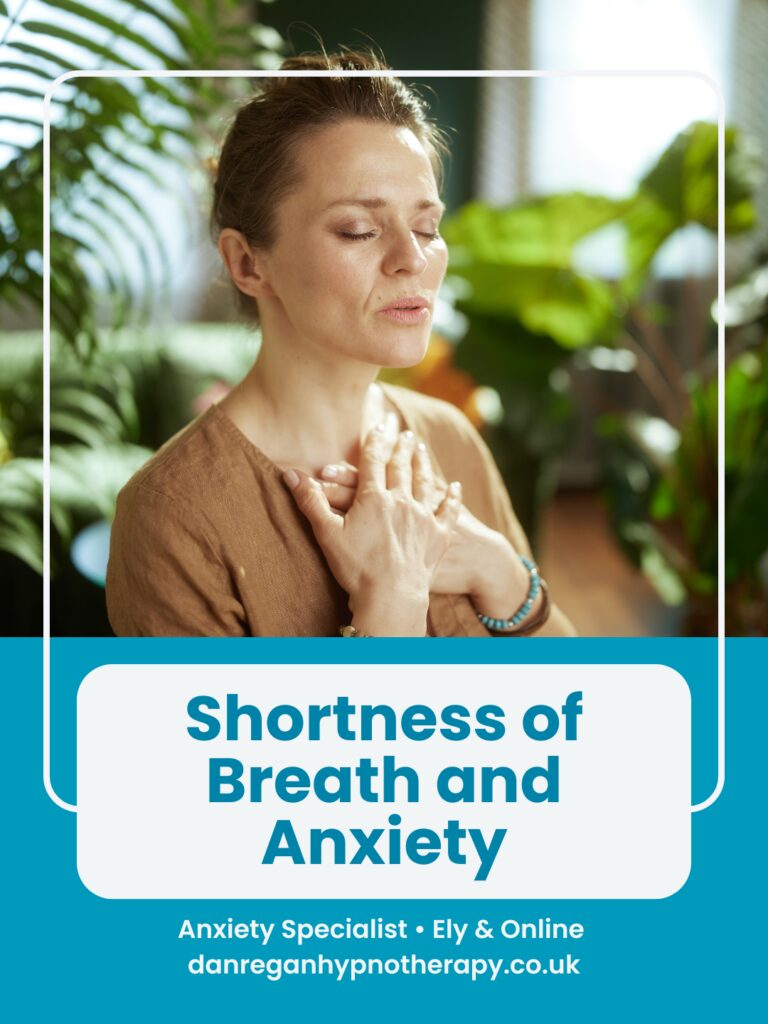
Shortness of Breath and Anxiety (Why It Happens and What Helps)
When anxiety and panic strike, your breathing becomes faster and shallower, yet it can feel like you are struggling with a shortness of breath. You may suddenly feel as though you can’t quite get a full breath, or that your breathing has become tight or shallow.
In my anxiety work in Ely and Newmarket, one of the most common and unsettling physical sensations people experience during anxiety is the feeling that they cannot get enough air. You try and breathe faster to get more air yet this just makes things worse. I’ve written separately about anxiety-related chest pain, as changes in breathing are often a big part of why that happens.
Many anxiety clients have told me how they have been told that they ‘don’t breathe properly’. It can become habitual to stay tense and on edge. Anxiety leads to a change in your breathing, and that change can create worry that something is medically wrong.
Many people describe feeling as though they cannot take a deep breath, or that their breathing has become tight or restricted. When this happens suddenly it can feel frightening and may lead people to worry that something serious is wrong.
In reality, shortness of breath is a very common physical symptom of anxiety. Understanding why it happens can help make the experience far less alarming and help you to find a solution that helps.
Quick Summary
Shortness of breath is one of the most frightening symptoms of anxiety, especially when it feels as though you can’t get enough air.
In this article you’ll discover:
- why anxiety changes the way you breathe
- why it can feel like you can’t take a full breath
- why breathing faster usually makes it feel worse
- why these sensations aren’t dangerous
- how understanding the pattern helps you regain control
One of the biggest turning points is realising your breathing feels difficult because anxiety has changed how you’re breathing, not because you’re running out of oxygen.
This is one article in my series explaining the most common physical symptoms of anxiety and why they happen:
- Physical Anxiety Symptoms
- Can Anxiety Cause Chest Pain?
- Can Anxiety Cause Dizziness?
- Can Anxiety Cause Diarrhoea?
- Why Anxiety Makes Your Heart Race
- Can Anxiety Make You Feel Sick?
- Can Anxiety Cause Tingling?
- Can Anxiety Cause Blurred Vision?
- Can Anxiety Cause Hot Flushes?
- Can Anxiety Cause Shaking or Trembling?
Related Articles
- Anxiety Support Hub
- Why Panic Attacks Feel So Intense
- Fear of Dying and Anxiety
- How To Calm Anxiety In The Moment
- Panic Attacks Hypnotherapy in Ely
- Hypnotherapy Reviews in Ely
Why Anxiety Affects Breathing
When anxiety activates the body’s fight-or-flight response, the nervous system prepares the body to react quickly to danger.
Part of this response involves changes to breathing.
Breathing often becomes:
- faster
- shallower
- more focused in the chest rather than the diaphragm
This helps the body take in oxygen quickly in case it needs to move rapidly.
Although this response is helpful when facing real danger, anxiety can trigger the same reaction even when there is no immediate threat. It feels strange and can cause you to worry further.
In fact, your breathing is the first thing that changes when you feel anxious. You may not notice this until you feel like you can’t breathe or that your chest gets tight.
Breathlessness during anxiety can sometimes appear suddenly alongside other symptoms such as dizziness or a racing heart. When this happens, many people wonder if they may be having a panic attack. You can read more about how to recognise a panic attack and what happens during one.
If you’re experiencing symptoms like breathlessness, dizziness or a racing heart, you may find it helpful to explore my anxiety hub for Ely, which explains how anxiety can affect both the mind and body.
Why It Can Feel Difficult to Breathe
Because breathing changes during anxiety, people may notice sensations such as:
- tightness in the chest
- feeling unable to take a full breath
- rapid breathing
- a sense of air hunger
These sensations can feel uncomfortable but they are not dangerous.
They are simply the body’s natural response to stress. However, they can create panic that something is wrong and this makes you more anxious and then that impacts upon your breathing even more noticeably.
One thing I often tell clients is not to wait until anxiety is at 9 out of 10 before trying breathing techniques. Practise them when you’re already fairly calm and they become much easier to use when anxiety starts rising. You can read more about how to calm anxiety in the moment using simple techniques.
Why Breathing Faster Makes It Worse
When anxiety rises, breathing naturally becomes faster and shallower. Your body is reacting and doing what it is designed to do in such situations.
However, many people then instinctively try to pull in bigger breaths because it feels as though they aren’t getting enough air. They panic becasue they feel they cna’t breath properly.
Unfortunately, this often makes the sensations feel even stronger.
- The more you focus on your breathing, the more aware you become of every breath.
- The more aware you become, the more anxious you feel.
- That anxiety changes your breathing even further and it becomes even faster and shallower.
Before long, you’ve become caught in another anxiety cycle where worrying about your breathing actually keeps the uncomfortable sensations going.
The encouraging news is that once you understand what’s happening and what you can do about it, this cycle becomes much easier to interrupt.
One Thing I Learned About Breathing
One of the physical symptoms I remember most clearly was feeling as though I couldn’t quite get a proper breath. No matter how deeply I breathed, it never seemed enough.
In interviews and presentations it would feel like I was struggling to speak because I didn’t have enough air to keep going. This would feed my worry about what other people were thinking about me.
I’d keep trying to take bigger and bigger breaths, convinced that if I could just fill my lungs properly I’d feel better, but the sense of not enough air continued.
Ironically, the harder I tried to control my breathing, the more uncomfortable it became. The deep breaths when highly anxious seemed to have no effect.
Looking back now, I realise my body wasn’t short of oxygen.
It was responding exactly as an anxious nervous system is designed to respond. Once I understood that, I stopped fighting my breathing so much, and it gradually settled on its own.
Anxiety, Panic and Breathing
Breathing changes often appear alongside other physical anxiety symptoms such as dizziness, a racing heart or shaking.
When these sensations happen suddenly, some people begin to worry they may faint, lose control, or that something serious is happening.
This is one reason why panic attacks can feel so frightening.
For some people, these experiences can also lead to fears such as a fear of dying during anxiety or panic attacks.
Why Breathing Anxiety Can Become a Cycle
Once people become aware of their breathing, they may start monitoring it closely.
This increased attention can make the sensations feel stronger, which can increase anxiety further.
Understanding that these breathing changes are part of the body’s anxiety response can often help reduce this cycle.
When anxiety and panic rises, many people try deep breathing or breathing techniques. However, because these are generally used only once feelings get strong, it can feel like it isn’t working and people give up too soon. However, learn to control your breathing and you start to take back control over the physical symptoms of anxiety. You can calm feelings if they start to rise and you can bring down unwanted anxious feeelings.
When Anxiety Symptoms Keep Returning
Occasional anxiety symptoms are very common. We are designed to experience stress and anxiety. However, if it is explainable and short lived then it is not too problematic.
Anxiety and panic become a problem when there is a repeating, ongoing cycle of unwanted thoughts and feelings that have a detrimental affect on your life.
However, if symptoms such as breathlessness, dizziness or a racing heart are appearing regularly, it may help to recognise some of the signs your anxiety is getting worse.
You may also find it helpful to understand when you should seek help for anxiety if anxiety is affecting everyday life.
The Good News
One of the biggest fears people have is that they aren’t getting enough oxygen and may faint, collapse or stop breathing altogether.
Fortunately, you can learn how to nip this symptom in the bud much more quickly. And as your nervous system becomes calmer, your breathing naturally becomes calmer too.
Many people are surprised how quickly the feeling of “not getting enough air” disappears once they stop interpreting every breath as a sign that something is wrong.
You don’t need to force your breathing back to normal.
You simply need to allow your nervous system to settle.
Frequently Asked Questions about Shortness of Breath and Anxiety
Can anxiety really make you feel short of breath?
Yes. Anxiety often changes the way you breathe, making your breathing feel faster, shallower or less satisfying. Your body tried to take in more oxygen to fuel your muscles becasue it perceives there is a danger or threat.
Why does it feel like I can’t get a full breath?
Because anxiety changes your breathing pattern and makes you much more aware of every breath you take. Your breathing gets shallower and you start to worry about what it means and not having enough air.
Can anxiety lower my oxygen levels?
For otherwise healthy people experiencing anxiety, the sensation is caused by changes in breathing rather than a lack of oxygen.
Should I always assume breathlessness is anxiety?
No. If breathlessness is new, severe, persistent, or accompanied by symptoms that concern you, it’s important to seek medical assessment rather than assume anxiety is the cause.
Finding Support
Shortness of breath during anxiety can feel frightening in the moment, but it is a common and natural response from the body.
Many people find that once they understand how anxiety affects breathing and the nervous system, these sensations feel much less alarming.
Understanding anxiety enables you to more effectively go on to calm anxious thoughts and feelings.
You can learn more here:
Or arrange a free initial consultation to discuss what might help.
To your health and happiness,
Dan Regan
Anxiety Therapy and Hypnotherapy in Ely and Newmarket
Could you use some help with your anxiety? Struggling with anxiety, stress, worry and fear and need some help? Find out how I can help with a Free Initial Consultation. Learn more here: Appointments
Find out what hundreds of other people have said after their anxiety hypnotherapy sessions with Dan: Hypnotherapy Testimonials
And check out these popular and powerful hypnosis downloads that can start helping you right away with anxiety, confidence and more: Hypnosis Downloads
Get Your Copy Right Now…
Subscribe to Dan’s Digest filled with tips, strategies and techniques and get instant access to your free rapid relaxation hypnosis audio track.
Enjoy feeling and being more mentally calm and physically relaxed right now:

0 Comments