
Required

Can Anxiety Cause Blurred Vision?
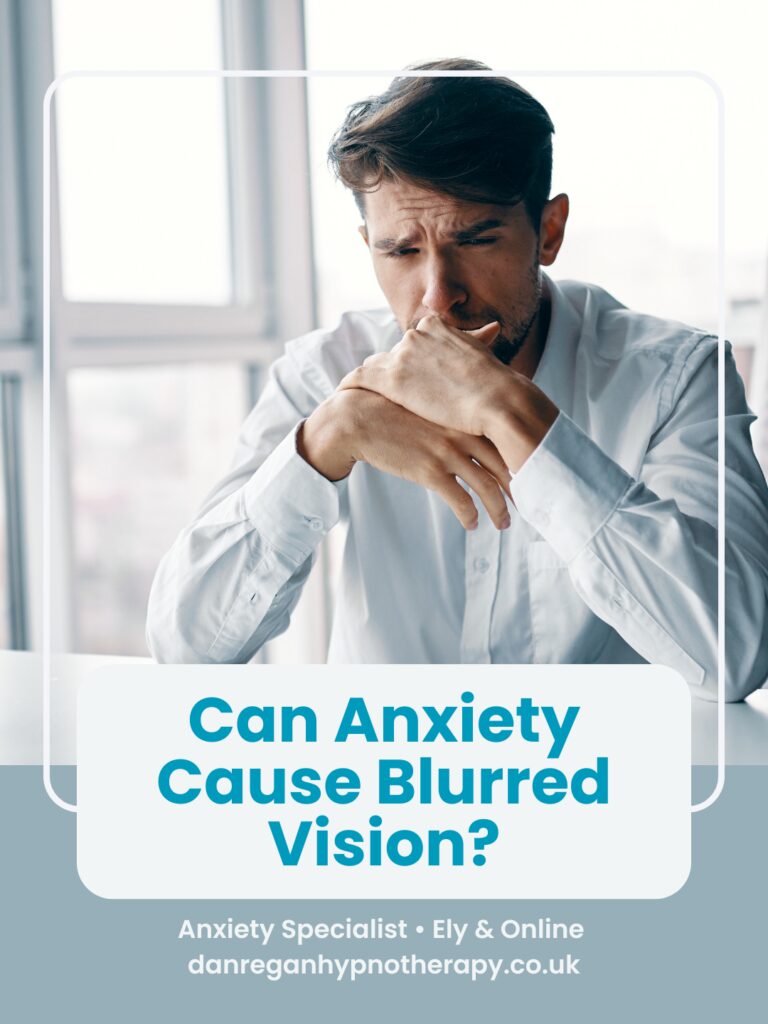
Can Anxiety Cause Blurred Vision?
Have you ever noticed your vision becoming slightly blurred or difficult to focus when you feel anxious? Perhaps things seem a little hazy, your eyes struggle to settle, or you find yourself blinking repeatedly trying to sharpen your vision. It can be unsettling and it’s easy to wonder whether something serious is wrong with your eyes or your health. So can anxiety cause blurred vision?
Many people I work with in Ely, Newmarket and across Cambridgeshire are surprised to discover that anxiety can affect the eyes and vision just as it affects the heart, breathing, stomach and muscles. Blurred vision isn’t usually the first symptom people associate with anxiety, which is why it can feel particularly worrying when it happens. Combined with the mental fog that often accompanies anxiety and an inability to think clearly, it can cause real confusion and fear.
When anxiety takes hold, your whole body changes. Your breathing alters, adrenaline is released, muscles tighten and your attention becomes intensely focused on potential danger. These changes can temporarily affect the way your eyes function and how your brain processes visual information and decides what deserves your attention. The more alarming the sensation feels, the more closely you monitor your vision, and the more noticeable every slight change can become.
Many clients describe worrying that they have developed an eye condition, a neurological problem or that they might be about to collapse. Others tell me they constantly test their eyesight by reading signs, checking number plates or comparing one eye with the other to see if things have improved. To your anxious mind on high alert, it can seem like further evidence that something is seriously wrong.
Can anxiety cause blurred vision? Yes, it certainly can. The reassuring news is that, although it can feel frightening, anxiety-related blurred vision is usually temporary and settles as your nervous system becomes calmer.
Let’s look at why it happens and, more importantly, what you can do to calm both your nervous system and the worry that often keeps the symptom going.
Quick Summary
Blurred vision can be another physical symptom of anxiety because the body’s stress response affects your breathing, muscle tension, pupils and concentration.
In this article you’ll discover:
- why anxiety can make your vision seem blurred
- why the symptom often appears during panic or high stress
- why worrying about your eyesight usually makes it feel worse
- how anxiety changes the way your brain processes visual information
- what helps your vision settle again
One of the biggest turning points is realising that anxiety-related blurred vision is usually a temporary effect of your body’s survival response rather than a sign that something is seriously wrong with your eyes.
This is one article in my series explaining the most common physical symptoms of anxiety and why they happen:
- Physical Anxiety Symptoms
- Can Anxiety Cause Dizziness?
- Can Anxiety Cause Tingling?
- Can Anxiety Cause Chest Pain?
- Why Anxiety Makes Your Heart Race
- Can Anxiety Make You Feel Sick?
- Shortness of Breath and Anxiety
- Can Anxiety Cause Diarrhoea?
- Can Anxiety Cause Hot Flushes?
- Can Anxiety Cause Shaking or Trembling?
Related Articles
- Anxiety Support Hub
- Health Anxiety
- Why Panic Attacks Feel So Intense
- Fear of Dying and Anxiety
- Hypnotherapy Reviews in Ely
Why Anxiety Can Cause Blurred Vision
Your eyes don’t work in isolation. Instead, they’re constantly responding to what your brain and nervous system are doing.
Whenever your brain believes you’re facing danger, it activates your fight-or-flight response. Stress hormones such as adrenaline and cortisol are released and your body immediately prepares for action. That preparation affects far more than just your heart and breathing.
Your pupils change size to allow more light into your eyes, helping you scan the environment more effectively for danger and for escape routes. Your eye muscles also become more tense and alert. At the same time, changes in breathing and blood chemistry can alter how clearly you perceive your surroundings. The thinking, logical part of your brain becomes less dominant because responding to a perceived threat takes priority. It can altogether feel disorientating and overwhelming.
Many people also find they become intensely focused on visual details, constantly checking whether their eyesight feels normal.
You may notice:
- slightly blurred vision
- difficulty focusing
- feeling as though your eyesight is “not quite right”
- increased sensitivity to bright light
- tired or strained eyes
- experiencing ‘floaters’
- difficulty concentrating on what you’re looking at
These are genuine physical effects of your body’s stress response rather than something imagined. Your mind perceives a threat of some kind and your body responds. Those threats can be things in your own thinking, focus and imagination about something bad happening. The more anxious you become, the more noticeable the physical symptoms of anxiety feel.
For many people, the blurred vision itself quickly becomes something else to worry about.
You might immediately wonder:
- “What if there’s something wrong with my eyes?”
- “What if I’m having a stroke?”
- “What if I’ve got a brain tumour?”
Those frightening thoughts increase anxiety even further, making the physical sensations even more noticeable.
As always, if blurred vision is new, persistent, severe or accompanied by other worrying symptoms, it’s important to seek medical assessment rather than simply assume anxiety is the cause. However, once medical causes have been ruled out, anxiety is a surprisingly common explanation for temporary blurred vision.
Why Blurred Vision Can Become a Cycle
One of the reasons blurred vision can become so frightening is that your eyesight is something you rely upon every second of every day. The moment it doesn’t feel completely normal, your attention immediately locks onto it.
The cycle often looks something like this:
- You notice your vision seems slightly blurred.
- Your mind immediately asks:
- “Why can’t I focus properly?”
- Then come the worrying thoughts:
- “What if something’s seriously wrong?”
- “What if I’m losing my eyesight?”
- “What if I collapse?”
- Those frightening thoughts create even more anxiety.
- Your nervous system releases more adrenaline.
- You begin checking your eyesight over and over again.
- You try reading signs.
- You compare one eye with the other.
- You repeatedly blink to see whether your vision has improved.
You may also head online and start looking up your symptoms, only to find out that it could be part of all sorts of terrible, unwanted ailments.
Ironically, the constant monitoring makes you even more aware of every tiny change in your vision.
Before long you’ve become caught in a self-perpetuating cycle where anxiety creates blurred vision, and worrying about the blurred vision creates even more anxiety. Many people also begin avoiding situations where they previously noticed the symptom, such as driving, supermarkets, busy shopping centres or bright environments.
The encouraging news is that once you understand this pattern, it begins losing much of its power. As your anxiety settles, your vision usually settles too.
One Thing I Learned About Anxiety and Vision
One thing I noticed during my own anxiety was how much I started monitoring my body. I would constantly scan for signs of anxiety. If something felt even slightly different, my attention would immediately zoom in on it.
Sometimes that meant my heart.
Sometimes it was my breathing.
Other times it was my vision.
I’d find myself wondering whether everything looked normal or whether I was about to feel worse. If I noticed the slightest change, my mind would immediately begin producing frightening explanations.
- “Something isn’t right.”
- “What’s happening to me?”
- “What if this gets worse?”
I can remember being in work and social situations, feeling uncomfortable, noticing my vision didn’t seem quite right. My attention turned more and more inwards and I would zone out of what was going on around me. I’d then start to worry even more about what other people thought about me. Sometimes, when anxiety had led to blurred vision, I would just feel like I wanted to go home and cry – partly to try and release the pent up anxiety and partly to try and reset my vision.
Looking back now, I realise it wasn’t my eyesight that was really causing the problem. It was the meaning I was attaching to the symptom and my worry about what it might mean.
My anxious brain was treating every small physical sensation as evidence that something serious must be happening.
Once I understood how anxiety affects the body and how closely attention influences what we notice, those visual changes became far less frightening. Instead of constantly checking whether my vision felt perfect, I gradually learned to let the sensation come and go without treating it as a threat. Ironically, that’s when I noticed it much less.
What Actually Helps
Once you understand why anxiety can affect your vision, you can begin calming the anxiety rather than accidentally feeding it.
Here are three things that often help.
1. Calm Your Nervous System
Because blurred vision is usually part of your body’s stress response, calming your nervous system is often the most effective place to start.
Slow, controlled breathing, relaxation exercises, hypnosis and regular physical activity all help reduce the fight-or-flight response.
As your breathing becomes steadier and your body relaxes, many of the physical symptoms of anxiety, including blurred vision, often begin settling too.
There’s more about this here:
Controlled Breathing To Calm Anxious Feelings
2. Stop Constantly Checking Your Vision
It’s completely understandable to keep testing your eyesight when something feels different. You zone in on it and find yourself becoming hyper vigilant for any signs of blurring.
However, repeatedly checking whether your vision has improved often keeps your attention locked onto the symptom.
Instead of continually asking yourself: “Can I see properly now?” gently remind yourself that anxiety commonly affects vision and allow your attention to move back to whatever you were doing.
The less importance your brain gives the symptom, the less threatening it usually becomes.
3. Reduce The Anxiety, Not Just The Symptom
Although blurred vision may be the symptom that’s worrying you today, it’s usually part of a much bigger anxiety pattern.
As your overall anxiety reduces, many physical symptoms begin reducing too.
People often notice improvements not only in their vision but also in dizziness, chest tightness, nausea, muscle tension and the constant feeling of being on edge.
The goal isn’t simply to stop one symptom, it’s to help your nervous system become calmer overall.
The Good News
One of the biggest surprises for many people is how much less frightening blurred vision becomes once they understand why it’s happening.
Instead of immediately thinking: “Something is wrong with my vision.”
they begin recognising: “My nervous system has switched on again.”
They recognise that this is just a sign of anxiety and that anxious thoughts and feelings can be calmed.
That simple shift often removes much of the fear that was keeping the cycle alive.
As your anxiety becomes calmer, not only do you experience less blurred vision but your attention gradually moves away from constantly monitoring your vision.
Many people are surprised that once they stop fearing every small visual change, they begin noticing those changes less and less.
Your brain becomes less alert for danger, your body spends more time in its natural relaxed state and life gradually starts feeling much more normal again. You stop looking for evidence that something is wrong and instead develop confidence that you can handle whatever sensations anxiety throws at you.
Frequently Asked Questions about Anxiety and Blurred Vision
Can anxiety really cause blurred vision?
Yes. Anxiety can temporarily affect the way your eyes and brain work together. Changes in breathing, adrenaline, muscle tension and heightened alertness can all make your vision seem blurred or difficult to focus.
Why does my vision become blurry when I panic?
During a panic attack your body’s fight-or-flight response activates very quickly. Your pupils, breathing and muscle tension all change as your body prepares for action. These changes can temporarily affect how clearly you perceive your surroundings. This change in how your body is responding to things can feel unusual and distressing even though it is a common physical symptom of anxiety.
Can anxiety make my eyesight seem different even when my eyes are healthy?
Yes. Many people experience temporary visual changes despite having perfectly healthy eyes. Once medical causes have been ruled out, anxiety is a common explanation for these symptoms. When anxiety is not present, you may find that your eyes and vision seem fine.
Why do I keep checking my eyesight?
Because blurred vision feels frightening and you don’t know why it is happening, your brain naturally wants reassurance that everything is normal. Unfortunately, repeatedly checking your eyesight often keeps your attention focused on the symptom, making it seem even more noticeable. The more you notice it, the more you may worry about what if something is wrong.
Should I always assume blurred vision is anxiety?
No. If blurred vision is new, persistent, severe or accompanied by other concerning symptoms, it’s important to seek medical assessment rather than assume anxiety is the cause. Many people I work with have already been examined by their optician or GP before focusing on reducing the anxiety itself.
Can hypnotherapy help anxiety-related blurred vision?
Many people find that as their anxiety reduces, the physical symptoms reduce too. By helping calm the nervous system and changing the anxiety patterns that keep the fight-or-flight response activated, hypnotherapy can help people feel calmer both mentally and physically.
Anxiety Hypnotherapy in Ely and Newmarket
Blurred vision is one of those anxiety symptoms that can feel particularly alarming because we naturally rely on our eyesight throughout the day. Many people also do not recognise it as a sign of anxiety and so worry that something is wrong. Many people tell me they become constantly aware of their vision, repeatedly checking whether it feels normal and worrying that something serious is happening.
The encouraging news is that once you understand why anxiety affects your body in this way, those symptoms often become much less frightening. Through hypnotherapy, my clients learn how to calm anxious thoughts, reduce physical tension and interrupt the anxiety patterns that keep the fight-or-flight response switched on.
As the anxiety reduces, many people notice that not only does their vision feel more settled, but they also feel calmer, more confident and much more able to enjoy everyday life again.
You can learn more here:
Or arrange a free initial consultation to discuss what might help.
To your health and happiness,
Dan Regan
Anxiety Therapy and Hypnotherapy in Ely and Newmarket
Get Your Copy Right Now…
Subscribe to Dan’s Digest filled with tips, strategies and techniques and get instant access to your free rapid relaxation hypnosis audio track.
Enjoy feeling and being more mentally calm and physically relaxed right now:

0 Comments