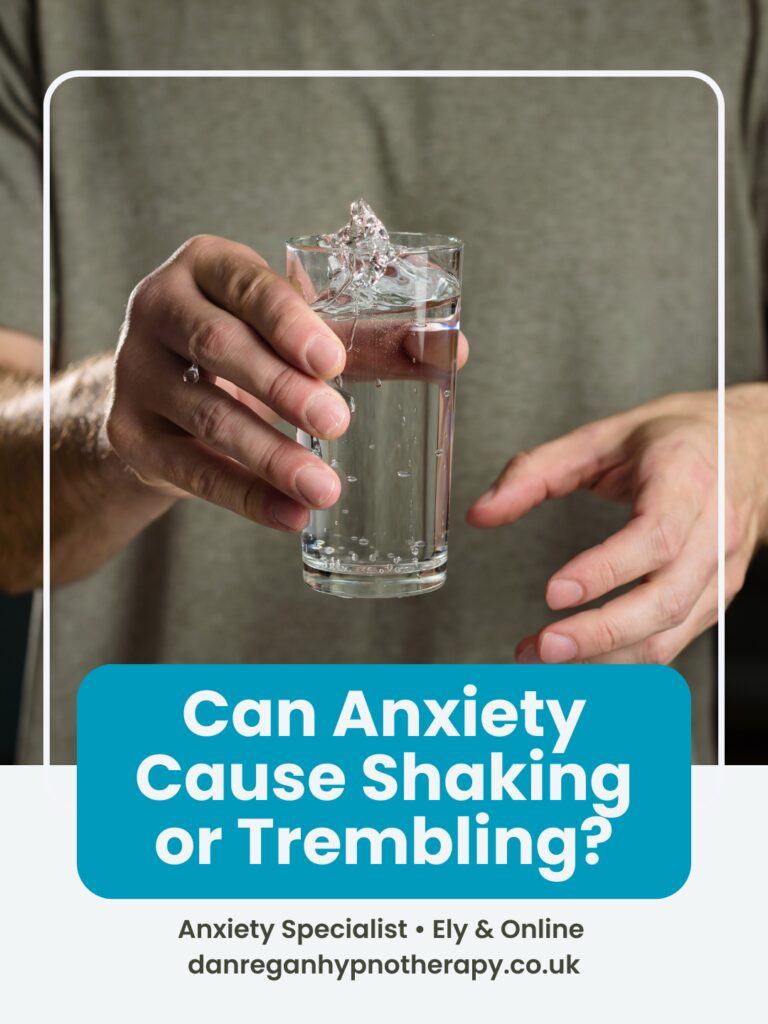
Have you ever noticed your hands shaking when you feel anxious? Perhaps your legs begin trembling, your voice becomes shaky or you feel as though your whole body is vibrating inside. It can be unsettling and embarrassing, especially if it happens in front of other people. You may wonder whether something serious is wrong with you or worry that everyone can see how anxious you feel. So can anxiety cause shaking or trembling?
Shaking is one of the physical anxiety symptoms people frequently describe in my work in Ely, Newmarket and online. Because it can appear suddenly and feel difficult to control, it is easy to assume something must be medically wrong. Others become anxious that people will notice the shaking and think they can’t cope.
When anxiety activates your body’s fight-or-flight response, your muscles prepare for action. Stress hormones such as adrenaline flood your body, increasing muscle tension and readiness to respond to danger. That extra muscle activity can create shaking, trembling or a feeling of internal vibrations, even when you’re sitting completely still.
Many clients tell me the shaking itself soon becomes the thing they fear most. They begin avoiding meetings, presentations, social situations or even holding a drink because they’re worried someone will notice their hands trembling. Others become hyperaware of every tiny movement, constantly checking whether the shaking has stopped.
Can anxiety cause shaking or trembling? Yes, it certainly can. The reassuring news is that, although shaking can feel frightening and embarrassing, it is usually a normal part of your body’s survival response rather than a sign that something serious is wrong.
Let’s look at why it happens and, more importantly, what you can do to calm both your nervous system and the anxiety that often keeps the cycle going.
Quick Summary
Shaking and trembling are common physical symptoms of anxiety because your body’s fight-or-flight response prepares your muscles for action by releasing adrenaline and increasing muscle tension.
In this article you’ll discover:
- why anxiety can make your hands, legs or body shake
- why trembling often appears during panic or stressful situations
- why worrying about the shaking usually makes it worse
- why your muscles respond this way during anxiety
- what helps your nervous system settle again
One of the biggest turning points is realising that anxiety-related shaking is usually a temporary effect of your body’s survival response rather than a sign that you’re losing control. As your anxiety becomes calmer, the trembling usually becomes less noticeable and much less frightening.
This is one article in my series explaining the most common physical symptoms of anxiety and why they happen:
- Physical Anxiety Symptoms
- Why Anxiety Makes Your Heart Race
- Can Anxiety Cause Dizziness?
- Can Anxiety Cause Blurred Vision
- Can Anxiety Cause Hot Flushes?
- Can Anxiety Cause Tingling?
- Can Anxiety Cause Chest Pain?
- Can Anxiety Cause Diarrhoea?
- Can Anxiety Make You Feel Sick?
- Shortness of Breath and Anxiety
Related Articles
- Anxiety Support Hub
- Health Anxiety
- Why Panic Attacks Feel So Frightening
- Fear of Losing Control and Anxiety
- Hypnotherapy Reviews in Ely
Why Anxiety Can Cause Shaking or Trembling
Whenever your brain believes you’re facing danger, it immediately activates your fight-or-flight response. Stress hormones, particularly adrenaline, are released into your bloodstream. These hormones prepare your body to react quickly if you need to escape from danger or defend yourself.
- Your heart beats faster.
- Your breathing changes.
- Your muscles tighten.
- Your body prepares for movement.
All of that extra energy has to go somewhere.
One of the ways this preparation can show itself is through shaking or trembling. Your muscles become highly activated and ready for action, even though there is no actual physical threat requiring you to run or fight. You may know logically that you are safe, but your mind starts to react as if there is a threat. That in itself can feel confusing and add to the anxiety.
Many people notice:
- shaking hands
- trembling legs
- a shaky voice
- trembling lips
- feeling as though their whole body is vibrating
- internal trembling that nobody else can even see
These sensations are genuine physical changes created by your body’s survival response.
If you were about to sprint away from danger or defend yourself, this increased muscle activation would be incredibly useful. The adrenaline and energy would become depleted and, once you felt safe, things would settle again. The difficulty is that anxiety activates exactly the same system when the danger exists only in your thoughts, imagination or worries about what might happen.
The more anxious you become, the more activated your nervous system becomes and the stronger the shaking can feel. This is particularly noticeable when you are sitting still or trying to appear calm. Your body has prepared your muscles for rapid movement, yet there is no physical danger requiring you to run or fight. Stress hormones continue circulating through your body, leaving your muscles tense, twitchy or trembling. That shaking is therefore not your body failing or losing control. It is another physical sign that your fight-or-flight response has become highly activated.
Often this happens in situations where you aren’t using your muscles and so there is no outlet for the adrenaline and energy in the muscles. The shaking is almost like your muscles start to move themselves because you aren’t physcially doing anything. A lot of shaking from anxiety is about adrenline and oxygen overload in your body.
Many people then begin worrying that the trembling itself means something is seriously wrong.
You might immediately wonder:
- “Why can’t I stop shaking?”
- “Am I losing control?”
- “Can everyone see this?”
Those frightening thoughts create even more anxiety, releasing even more adrenaline and making the trembling even stronger.
As always, if shaking is new, persistent, severe or associated with other concerning symptoms, it’s important to seek medical assessment rather than simply assuming anxiety is the cause. However, once other causes have been ruled out, temporary shaking or trembling can be a recognised physical symptom of anxiety. As you start to learn how to feel calmer, the shaking and trembling starts to reduce.
Why Shaking Can Become a Cycle
One of the reasons shaking becomes so distressing is that it often happens in situations where you’re already worried about how you’ll come across to other people.
The cycle often looks something like this:
- You notice your hands beginning to shake.
- Your mind immediately asks:
- “Why am I shaking?”
- Then come the worrying thoughts:
- “What if everyone notices?”
- “What if they think I can’t cope?”
- “What if I can’t stop?”
- Those thoughts create even more anxiety.
- Your nervous system releases more adrenaline.
- Your muscles become even more activated.
- The trembling becomes stronger.
Some people grip objects tightly in an attempt to hide the shaking. You may avoid picking up a drink in front of other people or use both hands to hold it steady. Others avoid eye contact because they don’t want attention drawn towards them.
Some stop drinking from cups or glasses in meetings because they’re worried people will notice their hands trembling.
Many begin avoiding presentations, interviews, eating in public or any situation where they think the shaking might become visible. You may worry that the shaking or trembling is all part of something more serious happening to your health.
Before long you’ve become caught in a self-perpetuating cycle where anxiety creates the shaking, and worrying about the shaking creates even more anxiety.
The encouraging news is that once you understand this pattern, it begins losing much of its power.
One Thing I Learned About Shaking With Anxiety
One thing I remember particularly well was how much I worried that other people would notice my hands shaking.
It wasn’t usually the shaking itself that bothered me most. It was what I imagined other people would think.
I can remember holding a cup of coffee in meetings and wondering whether everyone could see it moving slightly in my hand. Sometimes I’d deliberately put it back down rather than risk somebody noticing. At other times I’d clasp my hands together or sit on them because I felt embarrassed by even the slightest tremor. In interviews or important meetings, I’d struggle to even pick up a glass of water and had to leave it, no matter how thirsty I was.
I can also remember a time, very early on in my anxiety, where I got on a bus and was shaking visibly as I tried to sort the correct coins to pay with the driver watching over me. It didn;t help at all when he pointed out how much my hands were shaking. I quickly paid, found a seat and put my head down, as though I were trying to disappear in case anyone else had noticed and was judging me too.
Before presentations or speaking in front of groups, I wasn’t just anxious about what I had to say. I was anxious that people might notice my hands shaking or hear my voice wobble. Sometimes my legs would jitter or bounce, as though I couldn;t keep them still. The more I worried about appearing anxious, the more anxious I became.
Looking back now, I realise that most people were paying far less attention to me than I imagined. Even when I felt convinced the shaking must have been obvious, it often wasn’t nearly as noticeable as it felt. However, my worry about it only made it worse and led to more worry about people noticing it.
The real problem wasn’t the trembling itself. It was the meaning I attached to it and what I thought others would think about me.
I believed that if someone noticed me shaking, they would think I was weak, incapable or somehow failing. It seemed like a visible sign of how anxious I was and like some sort of personal failing.
Once I understood that trembling was simply my body’s natural response to anxiety, I gradually stopped treating it as something I needed to hide at all costs.
Ironically, that was when the shaking began losing much of its power.
What Actually Helps
Once you understand why anxiety can make your body shake, you can begin calming the anxiety rather than accidentally feeding it.
Here are three things that often help.
1. Calm Your Nervous System
Because shaking is driven by your body’s fight-or-flight response, calming your nervous system is usually the most effective place to start.
Slow breathing, relaxation, hypnosis, walking and regular exercise can all help your nervous system settle and reduce your body’s overall level of tension.
As your nervous system settles, many people notice the shaking becoming less frequent and much less intense.
There’s more about this here:
Controlled Breathing To Calm Anxious Feelings
2. Stop Monitoring the Trembling
It’s completely understandable to keep checking whether your hands are still shaking.
However, constantly looking at your hands, testing whether you’re trembling or wondering whether other people can see it often keeps your attention firmly fixed on the symptom.
Instead, gently acknowledge what’s happening and remind yourself that trembling is a recognised part of anxiety.
Allow your attention to return to the conversation or activity in front of you rather than continually checking your body.
The less importance your brain gives the symptom, the less threatening it usually becomes.
3. Reduce The Anxiety, Not Just The Shaking
Although trembling may be today’s most worrying symptom, it’s usually just one part of a much bigger anxiety pattern.
As your overall anxiety reduces, many physical symptoms improve together.
People often notice fewer hot flushes, less dizziness, calmer breathing, reduced muscle tension and fewer panic symptoms alongside less shaking.
The goal isn’t simply to stop your hands trembling.
It’s to help your nervous system become calmer overall so anxiety no longer dominates your daily life.
The Good News
One of the biggest surprises for many people is how much less frightening shaking becomes once they understand why it’s happening.
Instead of immediately thinking: “Something’s wrong with me.”
they begin recognising: “My body’s alarm system has switched on.”
That simple change removes much of the fear that keeps the cycle alive.
The less you worry about trembling, the less adrenaline your body produces and the easier it becomes for your muscles to relax again.
As your nervous system spends more time in its natural relaxed state, many people notice that the shaking becomes less frequent, less intense and much easier to ignore.
Even better, your confidence begins returning because you no longer organise your life around trying to prevent the shaking from happening.
You stop worrying about what other people might think and instead develop confidence that you can handle whatever sensations anxiety throws at you.
Frequently Asked Questions about Anxiety and Shaking
Can anxiety really make you shake?
Yes. Anxiety commonly causes shaking or trembling because your body’s fight-or-flight response releases adrenaline and prepares your muscles for action. Although the sensation can feel alarming, it’s a recognised physical symptom of anxiety.
Why do my hands shake when I’m anxious?
When you’re anxious, adrenaline increases muscle activation and tension to prepare you to deal with a perceived threat. This can cause your hands to tremble, particularly during stressful situations, social anxiety or panic attacks.
Why do I shake more when holding a cup or glass?
Holding something can make you focus much more closely on your hands. You may tense your muscles, grip the object tightly and start watching for every tiny movement. That extra tension and self-monitoring can make the trembling feel more noticeable, particularly when you are worried that other people might see it.
Can panic attacks make your whole body shake?
Yes. Many people experience trembling throughout their body during a panic attack. The body’s alarm system activates very quickly, producing adrenaline that can make muscles feel shaky, weak or as though they’re vibrating.
Why do I keep worrying that other people can see me shaking?
Many people become anxious about other people noticing their symptoms. Unfortunately, that additional worry produces even more adrenaline, making the trembling more noticeable. The fear of shaking often becomes more of a problem than the shaking itself.
Can anxiety cause internal shaking?
Yes. Some people describe feeling as though they’re trembling inside even though nobody else can see it. This internal trembling is another common effect of an activated nervous system.
Should I always assume shaking is anxiety?
No. If shaking is new, persistent, severe or accompanied by other concerning symptoms, it’s important to seek medical assessment rather than assuming anxiety is the cause. Many people I work with have already been assessed by their GP before focusing on reducing the anxiety itself.
Can hypnotherapy help anxiety-related shaking?
Many people find that as their overall anxiety reduces, symptoms such as shaking and trembling become much less frequent. By calming the nervous system and changing the anxiety patterns that keep the fight-or-flight response activated, hypnotherapy can help people feel calmer both mentally and physically.
Anxiety Hypnotherapy in Ely and Newmarket
Shaking and trembling can be among the most concerning symptoms of anxiety because they’re often visible to other people. Many people tell me they become just as worried about someone noticing their shaking as they do about the trembling itself.
The encouraging news is that once you understand why your body reacts this way, those sensations often become much less frightening. Through hypnotherapy, my clients learn how to calm anxious thoughts, reduce physical tension and interrupt the anxiety patterns that keep the fight-or-flight response switched on.
As anxiety reduces, many people notice they no longer fear the trembling. They feel calmer, more confident and much more able to enjoy work, social situations, presentations and everyday life again.
You can learn more here:
Or arrange a free initial consultation to discuss what might help.
To your health and happiness,
Dan Regan
Anxiety Therapy and Hypnotherapy in Ely and Newmarket