
Required

Can Anxiety Cause Tingling?
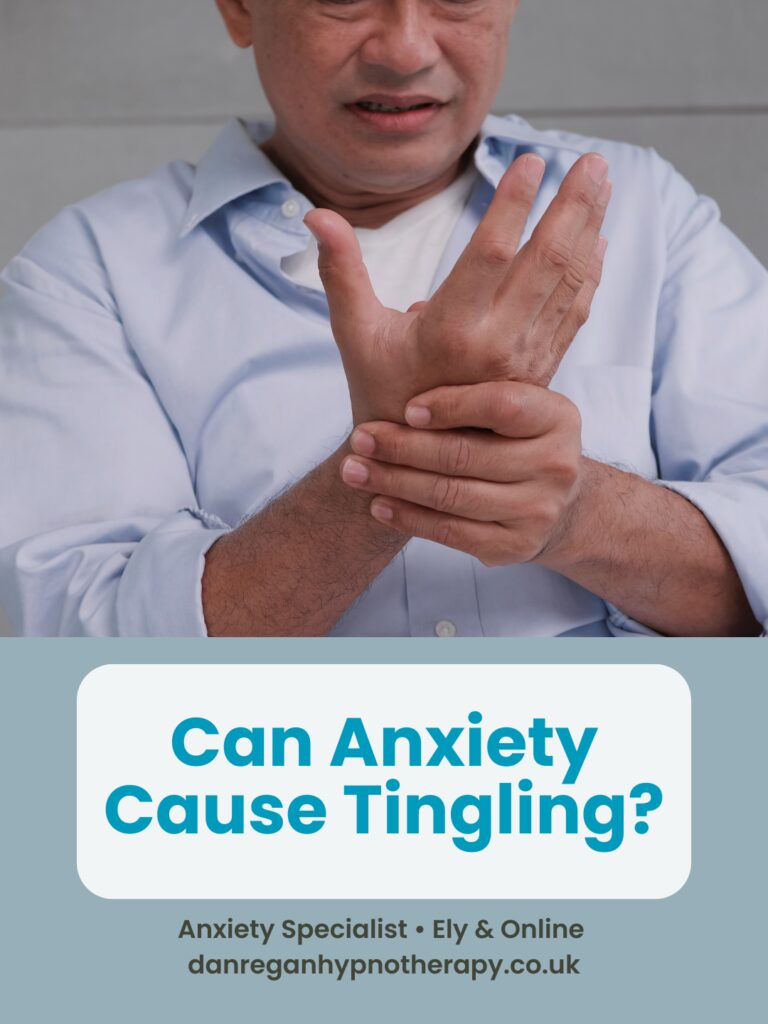
Can Anxiety Cause Tingling?
Have you ever noticed tingling in your hands, feet or face when you’re feeling anxious? It can feel strange, unsettling and sometimes frightening. Many people immediately wonder whether something serious is happening to their body. So can anxiety cause tingling?
Many people I work with in Ely, Newmarket and online are surprised to discover that tingling is a common physical symptom of anxiety. It often appears alongside symptoms such as a racing heart, dizziness, breathlessness or chest tightness. Because it can arrive suddenly and without an obvious explanation, it’s easy to assume there must be something medically wrong.
For some people, the tingling comes during a panic attack. For others, it appears during periods of prolonged stress or worry. You may notice it in your fingertips, around your mouth, in your arms or even your legs. The more you focus on it and worry, the stronger it can seem to become.
Like many physical symptoms of anxiety, tingling can become something you start worrying about. You notice every slight change in sensation and begin wondering what it means. That extra anxiety can make the tingling feel even more noticeable.
Can anxiety cause tingling? Yes, it certainly can. And although it’s a common anxiety symptom, it’s always sensible to have new or unexplained symptoms checked by a medical professional before assuming anxiety is the cause.
Let’s look at why it happens and, more importantly, what you can do to reduce it.
Quick Summary
Tingling in your hands, feet or face can be a surprisingly common symptom of anxiety because the body’s stress response changes breathing, circulation and muscle tension.
In this article you’ll discover:
- why anxiety can cause tingling sensations
- why tingling often happens during panic attacks
- why worrying about tingling usually makes it worse
- why the symptoms aren’t usually dangerous
- how understanding the pattern helps you regain confidence
One of the biggest turning points is realising that anxiety-related tingling is usually a temporary effect of your body’s survival response rather than a sign that something serious is wrong with your nervous system.
This is one article in my series explaining the most common physical symptoms of anxiety and why they happen:
- Physical Anxiety Symptoms
- Shortness of Breath and Anxiety
- Can Anxiety Cause Chest Pain?
- Can Anxiety Cause Dizziness?
- Why Anxiety Makes Your Heart Race
- Can Anxiety Make You Feel Sick?
- Can Anxiety Cause Blurred Vision?
- Can Anxiety Cause Diarrhoea?
- Can Anxiety Cause Hot Flushes?
- Can Anxiety Cause Shaking or Trembling?
Related Articles
- Anxiety Support Hub
- Fear of Losing Control and Anxiety
- Health Anxiety
- How To Calm Anxiety In The Moment
- Hypnotherapy Reviews in Ely
Why Anxiety Can Cause Tingling
Whenever your brain believes you’re facing danger, your body immediately prepares you to respond. Stress hormones such as adrenaline are released, your breathing changes, your heart beats faster and blood is redirected towards your muscles. These changes help prepare you to fight, flee or protect yourself. It’s a hard-wired survival response designed to help you to stay safe and protect yourself from danger.
One of the biggest reasons anxiety causes tingling is that anxious breathing often becomes faster or deeper than your body actually needs, changing the balance of oxygen and carbon dioxide in the blood. Those changes can temporarily affect the way nerves and muscles behave, leading to tingling sensations, particularly in your hands, fingers, feet and around your mouth.
Muscle tension can also contribute. Anxiety often causes people to tighten their shoulders, neck, jaw and arms without even realising it. That tension can sometimes compress nerves slightly or alter how sensations are experienced.
At the same time, anxiety makes you much more aware of what’s happening inside your body. Small sensations that would normally go unnoticed suddenly become the centre of your attention. And the more you notice them, the more significant they seem and the more you worry about the worst.
As always, if tingling is new, persistent, one-sided or accompanied by other symptoms that concern you, it’s important to seek medical advice. However, once medical causes have been ruled out, anxiety is a very common explanation for recurring tingling sensations.
Why Tingling Can Become a Cycle
One of the reasons anxiety-related tingling becomes so frightening is that the tingling itself soon becomes the next thing you fear.
The cycle often looks like this:
- You notice tingling in your fingers or face.
- Your mind immediately asks:
- “Why is this happening?”
- “What if it’s something serious?”
- “What if it’s multiple sclerosis?”
- “What if I’ve got nerve damage?”
- “What if it’s a stroke?”
- Those frightening thoughts create even more anxiety.
- Your breathing changes further.
- Your muscles tense.
- Your nervous system releases more adrenaline.
- The tingling becomes even more noticeable.
- Your brain then treats those stronger sensations as proof that something serious must be happening.
Before long, you’ve become caught in a self-perpetuating cycle where anxiety creates tingling, and the tingling creates even more anxiety. You start constantly checking whether there is any tingling and looking for signs of it. This creates more worry and anxiety that triggers the same cycle over again.
Like many physical symptoms of anxiety, it isn’t usually the tingling itself that keeps the cycle going. It’s what we begin believing the tingling means.
The encouraging news is that once you understand this pattern, and what your mind and body are doing, it begins losing much of its power.
One Thing I Learned About Tingling
One of the things that surprised me about anxiety was just how many different physical sensations it could produce.
Sometimes I’d notice tingling in my hands or fingertips. Other times it felt as though parts of my face felt slightly strange or numb.
At the time, my mind immediately jumped to worrying about what it might mean.
The more I thought about it, the more I seemed to notice it. I’d find myself just checking to see if there was any sign of some tingling. Like most anxiety physical symptoms, the more I looked for it, the more I found it. Even when everything felt ok, I would worry about what if it happened at work or when around others. When the tingling started, it would cause me to silently panic. I’d even wiggle my fingers or rub them together just to check whether the tingling was still there. If it happened in a meeting or when talking to someone, I would zone out of what was being said and become lost in my own internal thoughts and feelings.
Looking back now, I realise it wasn’t the tingling itself that kept the anxiety going. It was what I believed the tingling meant.
Once I understood how anxiety changes breathing, muscle tension and awareness of physical sensations, it became much easier to stop treating every tingling sensation as a warning sign.
What Actually Helps
Once you understand what’s happening, you can begin calming your nervous system rather than accidentally feeding the anxiety.
Here are three things that often help.
1. Slow Your Breathing
One of the biggest contributors to anxiety-related tingling is over-breathing.
Slowing your breathing and making your out-breath longer than your in-breath helps restore your body’s natural balance and often reduces tingling quite quickly.
There’s more about this here:
Controlled Breathing To Calm Anxious Feelings
2. Stop Constantly Checking the Sensation
It’s completely understandable to keep testing whether the tingling is still there.
Unfortunately, constantly monitoring it teaches your brain that the sensation must be important.
Instead, gently acknowledge it without treating it as an emergency.
The less attention your brain gives it, the less intense it often becomes.
3. Calm the Anxiety, Not Just the Tingling
Although the tingling feels like the problem, it’s usually a symptom rather than the underlying cause.
As your overall anxiety reduces, many people notice tingling becoming less frequent alongside improvements in dizziness, nausea, chest tightness and other physical symptoms.
The Good News
One of the biggest surprises for many people is how quickly tingling becomes less frightening once they understand what’s causing it.
Instead of thinking: “Something must be seriously wrong.”
they begin recognising: “My anxious nervous system has switched on.”
That change in understanding often removes much of the fear that was keeping the cycle going.
As anxiety reduces, the nervous system settles and the tingling usually becomes much less frequent.
Frequently Asked Questions about Anxiety and Tingling
Can anxiety really cause tingling?
Yes. Anxiety commonly causes tingling sensations because changes in breathing, muscle tension and the body’s stress response temporarily affect how nerves and muscles function.
Where does anxiety tingling usually occur?
People often notice tingling in their hands, fingers, feet, toes or around their mouth. It can vary from person to person and may come and go.
Why does the tingling become worse when I think about it?
Anxiety makes you much more aware of physical sensations. The more attention you give to tingling, the more noticeable it often becomes.
Can panic attacks cause tingling?
Yes. Tingling is a common symptom during panic attacks because breathing changes rapidly and the body’s fight-or-flight response becomes highly activated.
Should I always assume tingling is anxiety?
No. If tingling is new, persistent, one-sided or accompanied by weakness, speech problems or any symptoms that concern you, it’s important to seek medical assessment rather than assuming anxiety is the cause.
Anxiety Hypnotherapy in Ely and Newmarket
Many people tell me that once the tingling starts, they find it almost impossible to stop thinking about it. They constantly check whether it’s still there, worry about what it means and become increasingly anxious whenever it returns.
Through hypnotherapy, my clients learn how to calm anxious thoughts, reduce physical tension and switch off the constant fight-or-flight response. As anxiety reduces, tingling and many other physical symptoms often become much less frequent.
Instead of constantly wondering what every new sensation means, they can get back to concentrating on work, enjoying time with family and simply getting on with life.
You can learn more here:
Or arrange a free initial consultation to discuss what might help.
To your health and happiness,
Dan Regan
Anxiety Therapy and Hypnotherapy in Ely and Newmarket
Get Your Copy Right Now…
Subscribe to Dan’s Digest filled with tips, strategies and techniques and get instant access to your free rapid relaxation hypnosis audio track.
Enjoy feeling and being more mentally calm and physically relaxed right now:

0 Comments