
Required

Am I Having a Panic Attack?
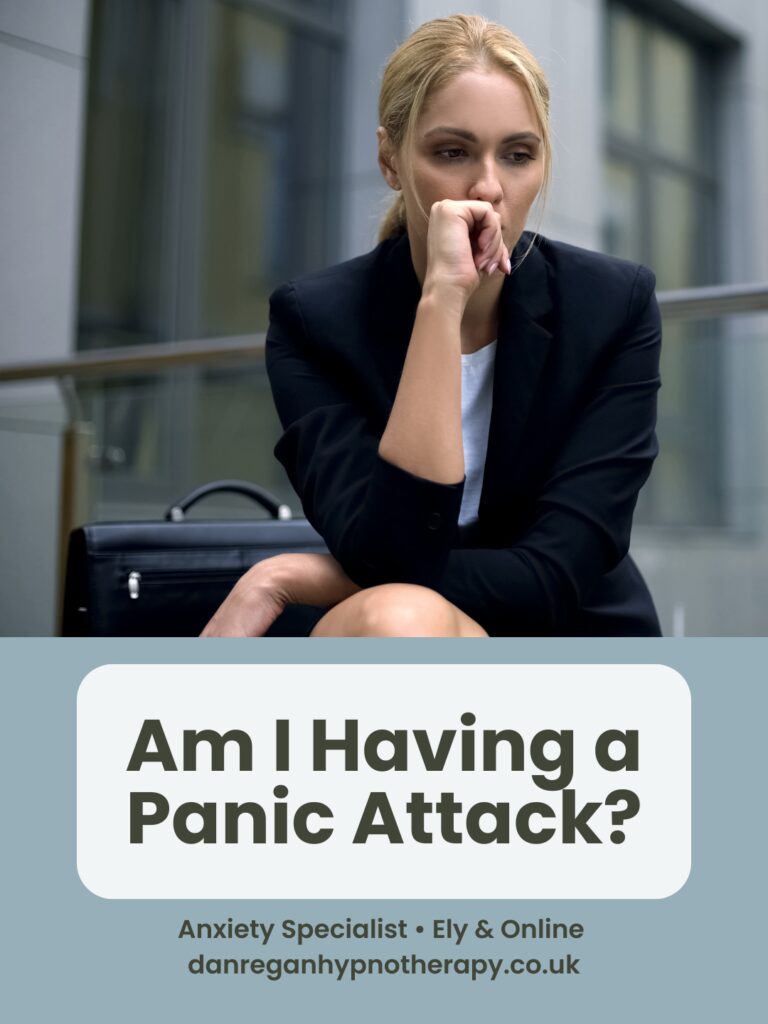
Am I Having a Panic Attack? (Understanding What’s Happening)
Your chest gets tight, you can’t get enough air and you feel dizzy and your heart starts to race. You struggle to think clearly and just want to escape from this uncomfortable situation. You may feel out of control, scared and confused. You might wonder, is there something seriously wrong with me, or am I having a panic attack?
Many people who experience a panic attack for the first time worry that something serious is happening to their body. It feels so overwhelming and it feels that there must be something medical happening. You might call out an ambulance or paramedics because you think you are having a heart attack.
The symptoms of a panic attack can appear suddenly and feel extremely intense. Your heart may start racing, breathing may feel difficult, and you might feel dizzy, shaky or overwhelmed. Even more problematic, you can’t think clearly and no amount of reason or logic seems to make any difference.
Because these sensations are so physical, it’s very common for people to wonder whether they might be having a medical emergency rather than a panic attack.
Understanding what’s happening inside your mind and body can make the experience far less frightening and help guide you towards the right support.
Quick Summary
Think you might be having a panic attack? The physical symptoms can feel so convincing that many people believe they’re experiencing a medical emergency.
In this article you’ll discover:
- how to recognise the common signs of a panic attack
- why panic attacks feel so overwhelming
- why they can feel like a heart attack
- how long panic attacks usually last
- what to do next if panic attacks keep happening
One of the biggest turning points is realising that a panic attack is your body’s natural fight-or-flight response switching on at the wrong time, rather than a sign that you’re losing control or something is seriously wrong.
Related Articles
I’ve also written more detailed articles about:
- Why Panic Attacks Feel So Frightening
- How to Calm a Panic Attack in the Moment
- Fear of Losing Control and Anxiety
- Physical Anxiety Symptoms
- Panic Attacks Hypnotherapy in Ely
- Hypnotherapy Reviews in Ely
What Is a Panic Attack?
A panic attack is a sudden surge of anxiety that activates the body’s fight-or-flight response very quickly. This response is designed to protect us from danger. When your brain senses a threat, it releases stress hormones such as adrenaline, preparing the body to react. Panic attacks tend to happen quickly as your mind perceives an immediate threat that you need to respond to with energy, strength and speed.
Even though this response is helpful when facing real danger, anxiety can sometimes trigger the same reaction even when no immediate threat exists. Sometimes anxiety quietly builds beneath the surface until it reaches a tipping point and suddenly develops into a panic attack. The situation, even though logically safe, is tagged by your brain as a threat and danger. Anytime you encounter a similar situation, your brain will activate the fight of flight response and you experience a panic attack.
And because your mind works on patterns, the panic can spread into other similar situations. This is how panic attacks can increase and start to impact upon more of your life. You can feel confused and uncertain and you start to avoid more things just in case you have a panic attack.
During a panic attack, people often experience several physical sensations at once.
These can include:
- a racing or pounding heart
- shortness of breath
- dizziness or light-headedness
- shaking or trembling
- tightness in the chest
- sweating or feeling hot
- a strong sense of fear or dread
Because these sensations happen suddenly, they can feel overwhelming.
You can read more about why anxiety makes your heart race and how the body’s stress response creates these sensations.
How Do You Know It’s a Panic Attack?
One of the biggest questions people ask after their first panic attack is: “Was that actually a panic attack?”
Although only a medical professional can diagnose medical conditions, panic attacks often follow a very recognisable pattern.
Typically:
- the symptoms come on suddenly
- several physical symptoms appear at once
- the intensity builds very quickly
- your thoughts immediately jump to the worst-case explanation
- the symptoms gradually settle as your nervous system calms down
You may feel quite tired after a panic attack and need some time to settle.
Many people describe thinking:
- “I’m having a heart attack.”
- “I’m going to faint.”
- “I’m dying.”
- “I’m losing control.”
These thoughts are completely understandable because the physical sensations feel so convincing. Many people remember their first panic attack vividly because it was so unsettling.
If you’ve never experienced these symptoms before, or you have any concerns about your health, it’s always sensible to seek medical assessment rather than assuming anxiety is the cause.
Once serious medical conditions have been ruled out, many people discover that what they’ve been experiencing are panic attacks rather than something physically wrong.
Why Panic Attacks Feel So Frightening
The frightening part isn’t just the physical sensations. It’s what your mind immediately concludes those sensations must mean.
When your heart races, breathing changes and dizziness appears, your brain naturally searches for an explanation.
Many people immediately think:
- “I’m having a heart attack.”
- “I’m going to collapse.”
- “I’m losing control.”
Those frightening thoughts create even more anxiety, which makes the physical sensations even stronger.
That’s one reason panic attacks can escalate so quickly.
The encouraging news is that once you understand what’s happening, much of that extra fear begins disappearing.
Why Panic Attacks Become a Cycle
One panic attack doesn’t usually become a problem because of the attack itself.
It becomes a problem because you begin fearing the next one.
The cycle often looks like this:
- You notice a physical sensation.
- Your mind immediately asks:
- “What if this is another panic attack?”
- “What if I can’t escape?”
- “What if everyone notices?”
- Those frightening thoughts release more adrenaline.
- The physical sensations become stronger.
- Your brain then interprets those stronger sensations as proof that another panic attack is happening.
Before long, you’ve become caught in a self-perpetuating cycle where the fear of panic actually helps create more panic.
Many people eventually begin avoiding places, journeys or situations where they’ve previously panicked. The encouraging news is that once you understand this pattern, it begins losing much of its power.
One Thing I Learned About Panic Attacks
One of the things I found hardest wasn’t actually the panic attack itself. It was never knowing when another one might happen.
Once I’d had one in a particular situation, my mind almost seemed to expect another one there.
Sometimes I’d be worrying about it before I’d even left the house. I’d constantly check how I felt and scan my body for any signs that another panic attack might be starting.
If I started noticing my heart beating faster or my breathing changing, I’d immediately wonder whether another panic attack was beginning. Ironically, that extra anxiety made me feel even hotter, shakier and more unsettled. If I was out I;d start worrying that others could tell how I was feeling. At the time it felt like a weakness that I needed to hide and so I would rush home as quickly as possible to where I felt safe again.
Looking back now, I realise it wasn’t the panic attack that kept the cycle going.
It was my fear of another one and how bad it would make me feel.
Once I understood what my body was actually doing, I gradually stopped treating every physical sensation as a warning sign. As that fear reduced, the panic attacks became much less powerful.
Panic Attacks and Physical Anxiety Symptoms
Many panic symptoms are also part of the body’s wider physical anxiety response.
For example, breathing may become shallow, which can create a feeling of shortness of breath during anxiety. Your heart may beat faster, and your body may feel tense or shaky. The more you understand these physical sensations, the less power they usually have over you.
Understanding how anxiety affects the body can help these sensations feel less alarming. That interrupts the additional anxiety from focusing upon the sensations and worrying about something being medically wrong with you.
If you’re experiencing symptoms like breathlessness, dizziness or a racing heart, you may find it helpful to explore my anxiety hub for Ely, which explains how anxiety can affect both the mind and body.
How Long Do Panic Attacks Last?
Although panic attacks feel intense, they usually pass relatively quickly.
Most panic attacks peak within a few minutes and gradually settle as the body’s adrenaline levels reduce. It’s a short term, high energy and intensity state.
The body cannot stay in a full fight-or-flight state for long, which is why the symptoms eventually begin to ease.
Some people continue to feel unsettled after a panic attack and may take some time to feel back to their usual self.
Although panic attacks themselves are brief, the anxiety about having another panic attack, and the possibility of feeling that bad again, can leave you feeling generally anxious, tense and on edge.
What Actually Helps
Although panic attacks feel overwhelming, there are several things that genuinely help.
1. Understand What’s Happening
The more you understand panic attacks, the less mysterious they become.
Recognising that your body is activating its survival response often removes much of the fear that keeps panic going.
2. Calm Your Nervous System
Slow breathing, relaxation and grounding techniques help your nervous system begin switching off the fight-or-flight response.
Practising these regularly, rather than only during panic, makes them much easier to use when anxiety rises.
3. Reduce the Fear of Panic
Many people eventually recover not because they never feel anxious again, but because they stop fearing every physical sensation.
As the fear reduces, panic attacks usually become less frequent, less intense and much easier to recover from.
The Good News
One of the biggest misconceptions about panic attacks is that they always keep getting worse.
Fortunately, that’s rarely the case.
As people begin understanding what panic attacks are and stop interpreting every physical sensation as a sign of danger, they often notice a significant change.
The panic doesn’t feel quite so frightening. Recovery becomes quicker and confidence gradually returns.
Many people who once avoided things such as shops, travelling, work or social situations eventually find themselves doing those things comfortably again.
Frequently Asked Questions about Panic Attacks
How do I know if I’m having a panic attack?
Panic attacks usually involve a sudden surge of intense anxiety together with symptoms such as a racing heart, dizziness, breathlessness, shaking, sweating and overwhelming fear. If you’ve never experienced these symptoms before or you’re concerned, it’s important to seek medical assessment.
Can a panic attack really feel like a heart attack?
Yes. Many people initially believe they’re having a heart attack because panic attacks commonly cause chest tightness, a rapid heartbeat and shortness of breath. Once serious medical causes have been ruled out, panic is one of the most common explanations for these symptoms.
How long does a panic attack last?
Most panic attacks peak within several minutes before gradually settling as adrenaline levels naturally reduce. Although you may feel tired or emotionally drained afterwards, the intense panic itself cannot continue indefinitely. However, ongoing anxiety about what is happening can prolong how long your panic lasts.
Can panic attacks happen for no reason?
They often seem to come out of nowhere, but there’s usually anxiety building beneath the surface or your brain has learnt to associate certain situations with danger. Sometimes the trigger is obvious, while at other times it may be much less noticeable.
Can panic attacks stop completely?
Yes. Many people find that once they understand panic attacks, stop fearing the physical sensations and reduce their overall anxiety, panic attacks become much less frequent or stop altogether. It’s something I’ve seen many clients achieve over the years.
I also recently covered panic attacks in my monthly Ely Standard column.
Finding Support for Panic Attacks
Panic attacks can feel frightening, especially when they happen unexpectedly.
However, they are a common experience during anxiety and do not mean that something is seriously wrong with your body.
Many people find that once they understand how panic works, the symptoms begin to feel much less alarming. You can then learn how to calm the thoughts and feelings that contribute to ongoing anxiety and panic. The aim isn’t simply to stop panic attacks. It’s to help you feel confident enough that you stop fearing them altogether.
If anxiety or panic attacks have been affecting how you feel day-to-day, a free consultation is available to talk things through and explore what support might help.
You can learn more here:
Or arrange a free initial consultation to discuss what might help.
To your health and happiness,
Dan Regan
Anxiety Therapy and Hypnotherapy in Ely and Newmarket
Could you use some help with your anxiety? Struggling with anxiety, stress, worry and fear and need some help? Find out how I can help with a Free Initial Consultation. Learn more here: Appointments
Find out what hundreds of other people have said after their anxiety hypnotherapy sessions with Dan: Hypnotherapy Testimonials
And check out these popular and powerful hypnosis downloads that can start helping you right away with anxiety, confidence and more: Hypnosis Downloads
Get Your Copy Right Now…
Subscribe to Dan’s Digest filled with tips, strategies and techniques and get instant access to your free rapid relaxation hypnosis audio track.
Enjoy feeling and being more mentally calm and physically relaxed right now:

0 Comments