
Required

Why Anxiety Often Feels So Physical | Anxiety Explained
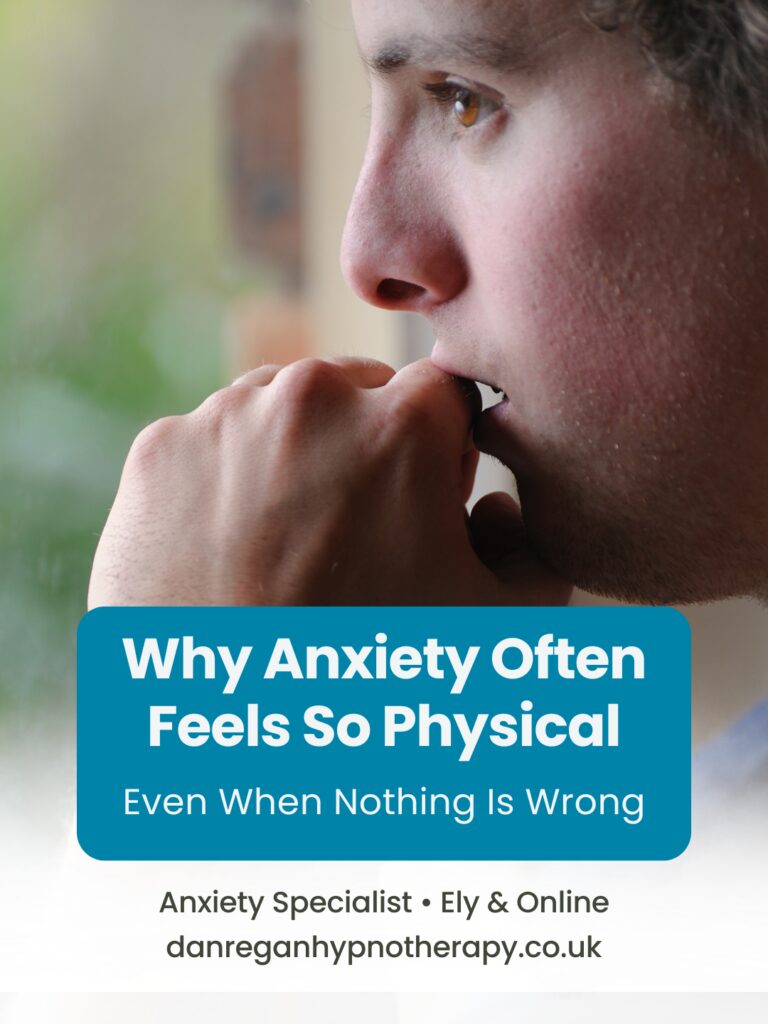
Why Anxiety Often Feels So Physical (Even When Nothing Is Wrong)
This article expands on questions I’m often asked by clients locally, particularly around why anxiety symptoms feel so physical even when medical tests come back clear.
Many people are surprised by just how physical anxiety can feel.
In my work as an anxiety specialist in Ely, one of the most common things clients tell me is that the physical sensations are often the most frightening part – sometimes even more distressing than the anxious thoughts themselves.
Symptoms such as a racing heart, chest tightness, dizziness, breathlessness, muscle tension or a churning stomach can feel intense and alarming. When these sensations come on suddenly or without a clear cause, it’s easy to worry that something is physically wrong.
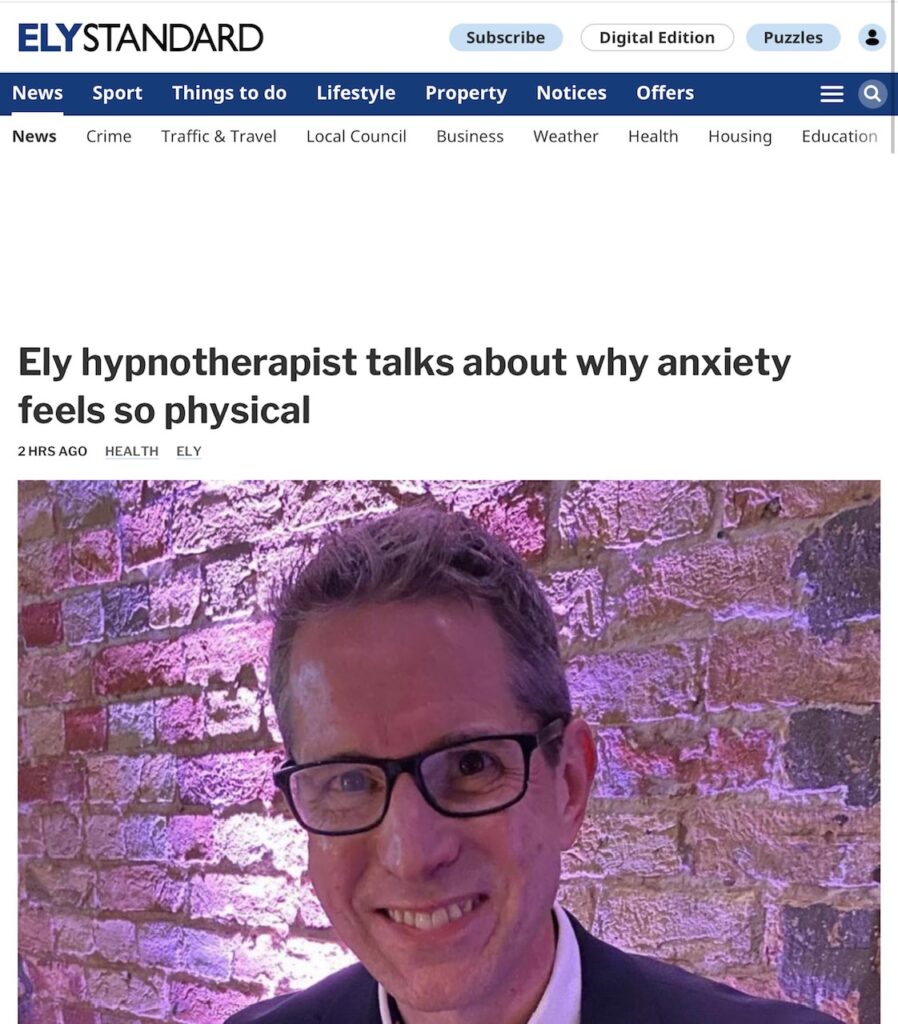
This is something I recently spoke about in my regular column published by the Ely Standard, exploring why anxiety so often shows up in the body rather than just the mind.
Quick Summary
Many people are surprised by how physical anxiety can feel.
In this article you’ll discover:
- why anxiety affects the body
- why symptoms can feel so frightening
- common physical anxiety sensations
- why medical reassurance doesn’t always stop anxiety
- how calming the nervous system can help
Anxiety is not “all in your head”. Anxiety affects the entire body, which is why symptoms can feel so real and convincing.
Related Resources
- Anxiety Support Hub
- Physical Anxiety Symptoms
- Why Anxiety Makes Your Heart Race
- Can Anxiety Cause Chest Pain?
- Can Anxiety Cause Dizziness?
- Am I Having A Panic Attack?
- Hypnotherapy Reviews in Ely
One Thing I Learned About Physical Anxiety
Something I remember from my own experience with anxiety was how convincing the physical symptoms felt.
When my heart raced, I didn’t think: “That’s anxiety.”
I thought: “Something must be wrong.”
It made me want to avoid situations, or escape to somewhere quieter.
Many people I work with tell me exactly the same thing.
The symptoms feel so physical that it’s easy to assume they must be caused by a physical problem.
Understanding what anxiety was actually doing inside my body helped me stop fearing the symptoms quite so much. That reduction in fear turned out to be important because the less frightened I became of the symptoms, the less power they seemed to have over me and the less intense they became.
Why The Body Reacts When Anxiety Is Present
Anxiety is closely linked to the nervous system. When your brain perceives threat, whether real or imagined, it activates the body’s fight-or-flight response.
This response is designed to protect you in moments of danger. Breathing becomes faster, the heart rate increases, muscles tense and the body prepares for action.
There’s more about common physical anxiety symptoms in my related article: Common physical anxiety symptoms
The difficulty arises when this system becomes overactive. Ongoing stress, worry or prolonged anxiety can cause the body to behave as if danger is present even when it isn’t. Over time, this can lead to persistent physical symptoms that feel confusing, frightening and out of control.
You can learn more about anxiety in all its forms here: Understanding Anxiety in Ely
Common Physical Symptoms Of Anxiety
Anxiety can create many physical symptoms including:
- racing heart
- chest tightness
- dizziness
- breathlessness
- shaking
- sweating
- tingling sensations
- stomach discomfort
- nausea
- muscle tension
- feeling detached or unreal
If this sounds familiar, you may also find it helpful to read Am I Having A Panic Attack?, which explains why these sensations can feel so frightening even when there is no immediate danger.
Experiencing these symptoms can feel distressing and uncomfortable although not everyone notices the same symptoms.
Some people mainly notice physical sensations while others experience more worry, overthinking or panic.
Why Physical Symptoms Feel So Convincing
One reason anxiety feels frightening is that the symptoms are real.
- The racing heart is real.
- The dizziness is real.
- The chest tightness is real.
The problem isn’t that the symptoms are imagined.
The problem is that anxiety is creating those sensations when no genuine threat exists. They are happening when not needed and in an overwhelming way.
This is why people often become trapped in a cycle where:
- They notice a symptom.
- They then worry about the symptom.
- Anxiety increases.
- The symptom becomes stronger.
- The symptom feels even more alarming.
You start to anticipate and expect anxiety, and these leads to it happening with more frequency. Understanding this cycle is often the first step towards breaking it.
Why Reassurance Alone Doesn’t Always Help
Many people are told to “’try to relax’ or ‘stop worrying’. While well-intentioned, this advice often falls short because anxiety symptoms are not created deliberately.
They are automatic physical responses driven by the nervous system. This is why anxiety can feel so real and intense even when you logically know you’re safe. Emotions, such as anxiety, will always prevail over clear, logical thinking. Your mind would rather keep you safe by preparing for a threat rather than doing nothing and there is some kind of danger. It’s part of our hard wired survival mechanism.
Understanding this can be a powerful first step. When people realise their body is responding automatically rather than malfunctioning, the symptoms often become less frightening. Your body is doing what it is designed to do but it is overdoing it when the response is not needed.
Anxiety: The Good News
The nervous system can learn to feel calmer again.
Just as anxiety can become a habit, calmness can become a habit too.
As you begin understanding anxiety differently, responding differently and reducing your fear of the symptoms, the nervous system often starts settling down quickly.
Many people are surprised how much easier things become once they stop treating every physical sensation as a sign of danger.
Frequently Asked Questions About Physical Anxiety
Can anxiety really cause physical symptoms?
Yes. Anxiety can affect breathing, heart rate, muscle tension, digestion and many other bodily processes. Your body prepares for action in response to a perceived threat.
Why does anxiety feel so physical?
Because anxiety activates the body’s fight-or-flight response, creating genuine physical changes designed to prepare you for danger (even though you know logically there is no danger).
Can anxiety cause chest pain?
Yes. Anxiety can contribute to chest tightness, discomfort and pain, often as a response to accelerated breathing. Any new or concerning symptoms should always be discussed with a medical professional.
Can anxiety cause dizziness?
Yes. Changes in breathing patterns, muscle tension and nervous system activation can contribute to feelings of dizziness or light-headedness.
Why doesn’t reassurance always help?
Because anxiety is often driven by automatic nervous system responses rather than logic alone. Emotions such as anxiety will always take precedence over logic.
Can hypnotherapy help physical anxiety symptoms?
Many people find hypnotherapy helps reduce anxiety, panic symptoms and fear of physical sensations while increasing feelings of calm and control.
Support For Anxiety
Because anxiety is rooted in the nervous system, approaches that help the body feel safe and settled are often more effective than logic alone. You need to be able to calm feelings in order to take back control over your thinking. This is how you end the spiral of anxiety. Learning how to calm the nervous system, reduce baseline tension and break cycles of fear can make a meaningful difference.
If anxiety has been creating frightening physical symptoms, it can help to remember that what you are experiencing is common.
The sensations are real but that doesn’t necessarily mean they are dangerous or permanent.
With the right understanding and support, many people find they can break the cycle of fear, calm their nervous system and start feeling more comfortable in their own body again.
You can learn more here:
Or arrange a free initial consultation to discuss what might help.
If you’d like to read the full article published by the Ely Standard, you can find it here:
Why anxiety often feels physical – Ely Standard
With the right support, you can calm anxious physical feelings and start feeling more calm, confident and in control.
To your health and happiness,
Dan Regan
Anxiety Hypnotherapy in Ely and Newmarket
Could you use some help with anxiety in Ely, Newmarket or Online? Struggling with anxiety, stress, worry and fear and need some help? Contact me to book your Free Anxiety Consultation: Contact Dan
Find out what hundreds of other people have said after their anxiety hypnotherapy sessions with Dan: Hypnotherapy Testimonials
And check out these popular and powerful hypnosis downloads that can start helping you right away with anxiety, confidence and more: Hypnosis Downloads
Get Your Copy Right Now…
Subscribe to Dan’s Digest filled with tips, strategies and techniques and get instant access to your free rapid relaxation hypnosis audio track.
Enjoy feeling and being more mentally calm and physically relaxed right now:

0 Comments