
Required

Why Panic Attacks Feel So Frightening – Ely Standard Feature
Why Panic Attacks Feel So Frightening – Ely Standard Feature
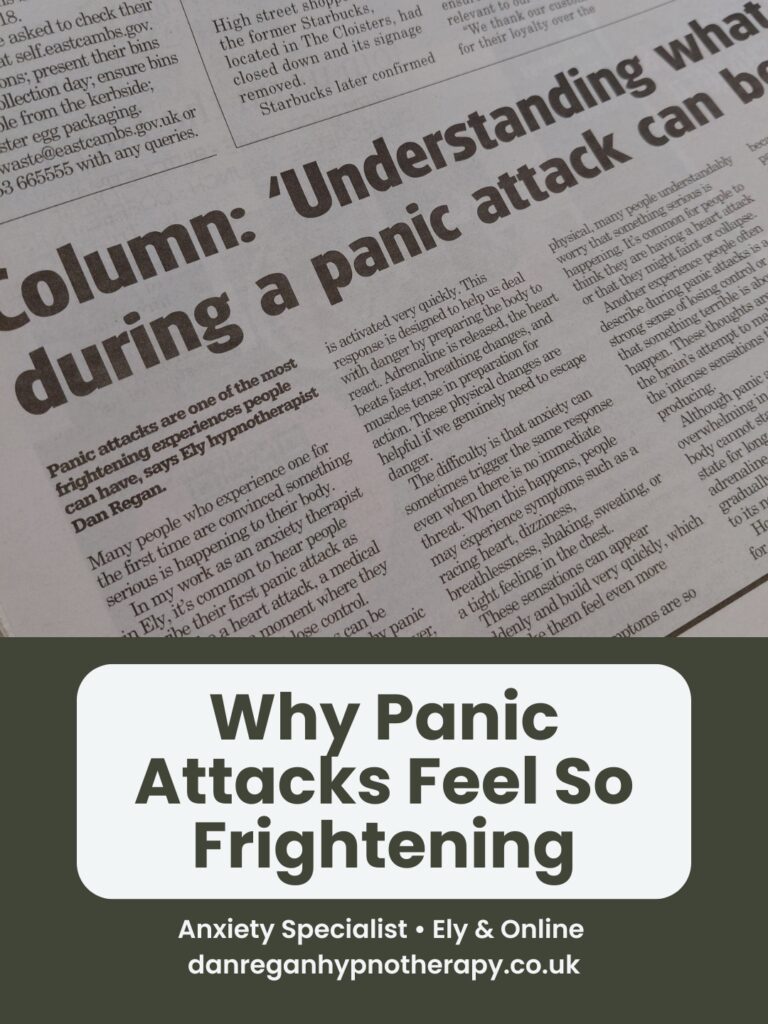
I was recently featured in the Ely Standard discussing panic attacks, something I see regularly in my work as an anxiety therapist in Ely.
Panic attacks are one of the most frightening experiences people can have, and many people initially believe something serious is happening to their body. People describe their first panic attack as feeling like a medical emergency, such as a heart attack or something seriously wrong with their body.
The feelings are so overwhelming that you can become anxious about having another panic attack. You get caught in a loop of dreading the worst and feeling on edge.
This is completely understandable.
You may start to avoid certain situations where you have previously experienced a panic attack. Because your mind works through learned patterns, you may find panic begins occurring more frequently or spreading into similar situations.
Panic attacks feel frightening, especially when you don’t know what is happening or how to deal with it. It’s encouraging to see anxiety and panic attacks being talked about more openly, as many people experience these symptoms but don’t always understand what’s happening.
Quick Summary
Panic attacks can feel terrifying because your body suddenly reacts as though you’re facing a life-threatening emergency, even when you’re actually safe.
In this article you’ll discover:
- why panic attacks feel so overwhelming
- why they can seem to come out of nowhere
- why the physical symptoms feel so convincing
- why the fear of another panic attack often becomes the biggest problem
- how understanding what’s happening helps you regain control
One of the biggest turning points is realising that a panic attack is your body’s natural survival response being activated at the wrong time, not a sign that you’re losing control or something is seriously wrong.
Related Articles
- Why Panic Attacks Feel So Intense
- Am I Having a Panic Attack?
- How to Calm a Panic Attack in the Moment
- Fear of Losing Control and Anxiety
- Physical Anxiety Symptoms
- Panic Attacks Hypnotherapy in Ely
- Hypnotherapy Reviews in Ely
Why Panic Attacks Feel So Real
A panic attack happens when your body’s fight-or-flight response switches on suddenly and intensely.
Within seconds, your nervous system releases adrenaline and begins preparing you to deal with danger.
- Your heart beats faster.
- Your breathing changes.
- Your muscles tense.
- Your pupils dilate.
- Your body prepares to run, fight or escape.
The difficulty is that anxiety can trigger exactly the same survival response even when there isn’t any genuine physical danger. However, when there is no physical threat to fight or escape from, all that adrenaline and energy has no obvious outlet. This is one reason the sensations can feel particularly confusing and overwhelming when you are sitting still, driving, attending a meeting or simply relaxing at home.
Once you have experienced a panic attack in a particular situation, your brain may begin labelling that situation as threatening. The next time you return, your nervous system can automatically produce the same anxious response again.
Because these changes happen so quickly, your logical mind struggles to catch up and your emotional mind takes charge. Instead of calmly recognising a false alarm, your brain begins searching for a threat and an explanation. An anxious mind tends to think in black-and-white terms, so the most frightening possibilities can quickly take over.
That’s why so many people think:
- “I’m having a heart attack.”
- “I’m going to collapse.”
- “I’m losing control.”
The sensations feel so convincing because they’re genuine physical changes created by your body’s survival system.
Common Symptoms
Many people experience panic attacks at some point in their lives, even if they’ve never had anxiety before.
People may experience:
- a racing heart
- dizziness or lightheadedness
- breathlessness
- shaking or sweating
- a tight feeling in the chest
Because these sensations are so physical, it’s very common to think something serious is happening. Many people call out a paramedic/ambulance or seek urgent medical help.
Your body prepares for action and exercise when you are not planning this. It all happens at the wrong time and feels disorientating and frightening, even though your body is designed to do these things.
You can read more about how anxiety works and why these symptoms feel so intense on my anxiety hub page.
The Fear of Losing Control
Another common experience during panic attacks is a strong fear of losing control or that something terrible is about to happen.
These thoughts are part of the brain trying to make sense of the physical sensations.
You feel like something serious is happening to you and you aren’t in control over your own mind and body.
You may also worry about this happening in important situations, when away from home or in front of other people. You dread another panic attack and, when it does happen, you struggle to calm yourself and think clearly.
Why Panic Attacks Always Pass
Although panic attacks feel overwhelming at the time, your body isn’t designed to stay in that heightened state indefinitely. Panic is all about being ready for action right now.
Adrenaline naturally begins reducing after a relatively short period.
As it does:
- breathing gradually slows
- heart rate settles
- muscles relax
- your nervous system starts returning towards its normal resting state
Many people continue feeling tired, emotional or slightly shaken afterwards, The intense surge begins to subside naturally, although continuing to worry, monitor your body or mentally replay what happened can keep you feeling unsettled for longer.
Knowing this can be reassuring because it reminds you that, however frightening the experience feels, it will always pass.
Why the Fear Can Continue
For many people, the most difficult part is not the panic attack itself, but the fear of it happening again.
This can lead to:
- avoiding certain situations
- becoming more aware of physical sensations
- increased worry about future panic
- heightened focus on how you are feeling
Many people experiencing panic attacks also become highly focused on physical symptoms such as dizziness, breathlessness or heart palpitations.
You start to fear the panic attacks. This anxiety keeps you on high alert and, inadvertently, can lead to more anxiety and panic.
In my work as an anxiety therapist in Ely, this is something I see regularly. Many people I speak to initially believe something is seriously wrong, only to later understand that these experiences are part of the body’s natural anxiety response.
Why Panic Attacks Become a Cycle
One of the reasons panic attacks can become so persistent is that the panic attack itself soon becomes the next thing you fear. The fear of the fear can lead to more panic attacks happening, and more frequently.
The cycle often looks like this:
- You notice a physical sensation.
- Your heart begins racing.
- Your breathing changes.
- You suddenly feel dizzy.
Your mind immediately asks:
- “What if this is another panic attack?”
- “What if I lose control?”
- “What if I can’t escape?”
Those frightening thoughts create even more anxiety.
Your body releases more adrenaline and the physical sensations become stronger. Your brain then interprets those stronger sensations as proof that something serious must be happening and there must be an immediate threat present.
Before long, you’ve become caught in a self-perpetuating cycle where anxiety creates panic, and the panic creates even more anxiety.
Many people eventually begin fearing the panic attack more than the situations themselves. The encouraging news is that once you understand this pattern, it begins losing much of its power.
One Thing I Learned About Panic Attacks
One of the things I remember most clearly wasn’t just how frightening the panic attacks felt. It was how convinced I became that something terrible was happening.
When the physical sensations started, I didn’t think: “This is just anxiety.”
I thought: “Something is seriously wrong.”
I dreaded anyone else seeing me in such an anxious state because I believed they would judge me. With my social anxiety, I could be pacing frantically at home with tears in my eyes, overwhelmed by the feelings and by worries about what people at work might be thinking about me.
At other times, I could simply be walking down the street and notice someone looking in my direction. My mind would immediately begin wondering what they were thinking or whether there was something wrong with how I looked. I would put my head down and rush somewhere I could be alone.
All that fear sent my mind racing. Whether I was at work or out socially, I desperately wanted to escape, get home or reach somewhere I felt safe. Even around friends, I sometimes shut down and looked for an excuse to leave.
Looking back now, I realise it wasn’t the panic attack itself that kept the cycle going. It was what I believed the panic attack meant and how frightened I became by the sensations.
Once I understood that my body was responding to anxiety rather than genuine danger, panic gradually became much less frightening.
The Good News
One of the biggest changes people experience isn’t that panic attacks immediately disappear.
It’s that they stop feeling quite so frightening.
Instead of thinking: “I’m losing control.”
they begin recognising: “My body’s alarm system has switched on.”
Without the additional fear that something catastrophic is happening, the nervous system can begin settling much more quickly.
That change in understanding often removes much of the fear that keeps the panic cycle alive.
As people become less frightened by the physical sensations, they often find panic attacks become less frequent, less intense and much easier to recover from.
Frequently Asked Questions about Panic Attacks
Can panic attacks really feel like a heart attack?
Yes. Panic attacks often cause chest tightness, a racing heart, breathlessness and dizziness, which can feel frighteningly similar to a heart problem. Many people tell me how they rushed to A&E or called out paramedics, to be told their health was fine and that it was anxiety and panic creating the physical sensations. However, if you’ve never experienced these symptoms before or have concerns, it’s important to seek medical assessment rather than assume anxiety is the cause.
Why do panic attacks come out of nowhere?
Although they often seem sudden, panic attacks usually develop after anxiety has been building beneath the surface. Sometimes the trigger is obvious, while at other times it may be a combination of thoughts, stress and learned anxiety patterns.
Can panic attacks make you lose control?
No. Although panic attacks can make you feel as though you’re losing control, people don’t suddenly become unable to control themselves because of panic. The feeling is a recognised part of the body’s anxiety response.
Why do I keep worrying about another panic attack?
Because the first panic attack was so frightening, your brain naturally tries to stop it happening again. Unfortunately, constantly watching for signs of panic often keeps your nervous system on high alert and makes further panic attacks more likely.
Can panic attacks stop completely?
Yes. Many people find that once they understand panic attacks, stop fearing the physical sensations and reduce their underlying anxiety, panic attacks become much less frequent or stop altogether.
Related Panic & Anxiety Articles
You can also read more about:
- Am I Having a Panic Attack?
- How to Calm a Panic Attack in the Moment
- Can Anxiety Cause Dizziness?
- Fear of Losing Control and Anxiety
- Panic Attacks Hypnotherapy in Ely
Without this understanding, you panic about the panic and so it gets more intense and lasts longer. Understanding what is happening often helps people feel less frightened by the symptoms and more able to respond calmly when panic rises.
Read My Ely Standard Feature About Panic Attacks
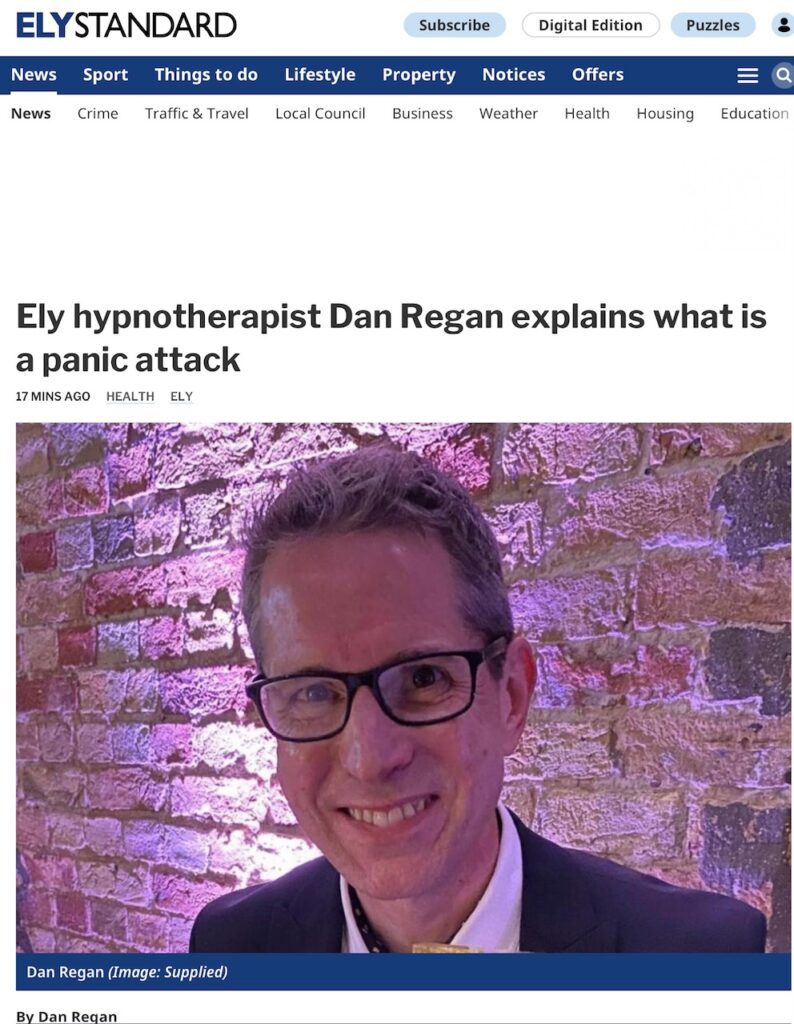
The Ely Standard article is available online on their website for you to read right now:
Ely hypnotherapist Dan Regan explains what a panic attack is
The feature also appeared in the printed edition of the Ely Standard.
Panic Attacks Therapy and Support
If panic attacks have been happening more regularly, it’s important to know that this is something that can change.
Panic attacks themselves are not dangerous, although new, severe or unexplained physical symptoms should always be medically assessed rather than automatically assumed to be anxiety.
With the right understanding and support, it’s possible to break the cycle of fear and feel more in control again. It’s something I’ve seen my clients achieve time and time again.
If panic attacks or anxiety are affecting your day-to-day life, support is available.
You can learn more here:
Or arrange a free initial consultation to discuss what might help.
To your health and happiness,
Dan Regan
Anxiety Therapy and Hypnotherapy in Ely and Newmarket
Could you use some help with your anxiety? Struggling with anxiety, stress, worry and fear and need some help? Find out how I can help with a Free Initial Consultation. Learn more here: Appointments
Find out what hundreds of other people have said after their anxiety hypnotherapy sessions with Dan: Hypnotherapy Testimonials
And check out these popular and powerful hypnosis downloads that can start helping you right away with anxiety, confidence and more: Hypnosis Downloads
Get Your Copy Right Now…
Subscribe to Dan’s Digest filled with tips, strategies and techniques and get instant access to your free rapid relaxation hypnosis audio track.
Enjoy feeling and being more mentally calm and physically relaxed right now:

0 Comments