
Required

Anxiety in Ely: Why More People Are Struggling
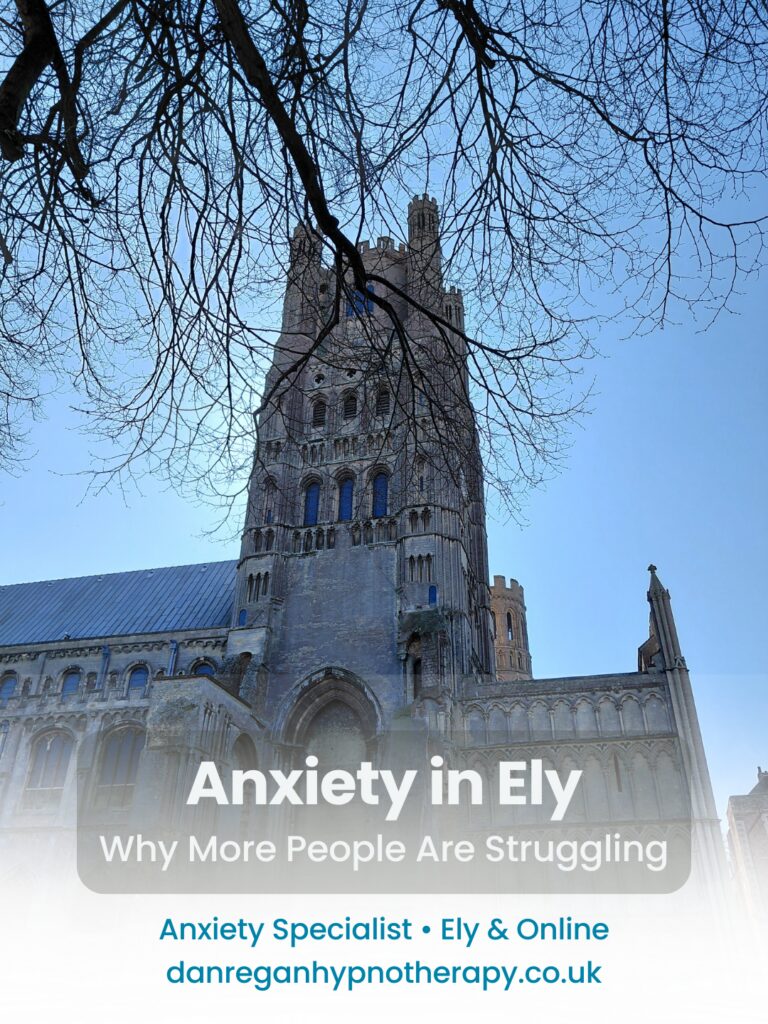
Anxiety in Ely: Why More People Are Struggling (And What Helps)
Today I’m talking about the experience of anxiety in Ely. In recent years, more people in Ely and the surrounding areas have been reaching out for help with anxiety.
Anxiety is becoming more common, not because something is “wrong”, but because many people are living with ongoing pressure, mental overload, and difficulty switching off. In my work locally, I’ve seen a noticeable increase in people experiencing overthinking, panic, and ongoing feelings of being on edge – even when life appears to be going well on the surface.
Some describe it as constant overthinking and being unable to switch off. Others notice physical symptoms, panic, or a feeling of being overwhelmed that doesn’t seem to switch off.
The cycle of thinking the worst and feeling anxious starts to take hold – and then keeps going. While anxiety has always existed, it is something that many people are noticing more in their day-to-day lives. And it is a pattern that can be positively changed.
Some people have more of a tendency to worry and think negatively, others find it creeps up then seems to take over.
Anxiety is not a sign that something is wrong with you – it is often a sign that your system has been under pressure for a period of time.
Quick Summary
Many people across Ely and the surrounding area are finding that anxiety has gradually become part of everyday life.
In this article you’ll discover:
- why more people in Ely are experiencing anxiety
- common patterns I regularly see in local clients
- why anxiety often develops gradually rather than overnight
- why nothing has to be “wrong” for anxiety to take hold
- what helps you begin breaking the cycle
Anxiety is becoming more common, but that doesn’t mean it has to become your normal. With the right approach, these patterns can be changed.
Related Articles
- Anxiety Support Hub
- Physical Anxiety Symptoms
- Why Do I Feel Anxious?
- Why Anxiety Isn’t Going Away
- High Functioning Anxiety
- Anxiety and Overthinking
- Intrusive Thoughts and Anxiety
- When Should You Seek Help For Anxiety?
Why Anxiety Is Becoming More Common
There are a number of factors that can contribute to rising anxiety levels.
In Ely and across Cambridgeshire, my clients often describe:
- increased work and family pressure
- busy, fast-paced lifestyles
- constant mental stimulation
- feeling unsettled by world events
- difficulty switching off
Natural anxiety and worry can mushroom into an ongoing problem. Even when life looks ‘fine’ on the surface, the nervous system can still be under strain.
Confusingly, sometimes the anxiety and panic seems to take hold some time after you have been under stress, a sort of delayed impact.
One Thing I’ve Noticed Working In Ely
One thing I’ve noticed over the years is that the people who contact me in Ely often believe they’re the only one feeling this way. They tell me they look around and everyone else seems to be coping, while they feel stuck in their own heads.
To them, everyone else appears calm, confident and to have their life sorted.
Then they sit down in my therapy room and describe exactly the same patterns I’ve heard hundreds of times before.
- Constant overthinking.
- Feeling on edge.
- Worrying about worrying.
- Difficulty switching off.
- Feeling exhausted despite doing very little physically.
One of the biggest reliefs for many people is simply realising they’re not unusual or broken. Their minds have just become trapped in a cycle of habitual anxious thoughts and feelings theat now feel overwhelming.
They’re experiencing the same habitual pattern of anxiety that I see every week – and one that can be changed.
Logically there is no threat. However, the worry and stress over-ride clear thinking as your mind seeks the source of the threat and danger. Your fearful emotions feed your imagination and focus and this, in turn, creates even more anxiety. It may feel like there is always something to worry about as your mind moves from one thing to the next.
Why It Isn’t Really About Ely
What people describe to me is not about Ely itself. It mirrors the national trend for increased anxiety.
What I do see is that Ely reflects what’s happening across much of the country right now. People are juggling work, family life, financial pressures, constant notifications, social media and very little genuine downtime.
Ely is a wonderful place to live, but the people living here experience the same pressures as everyone else.
Anxiety isn’t usually about where you live.
It’s about the patterns your mind and nervous system have gradually developed in response to life’s pressures.
How Anxiety Often Shows Up
Anxiety doesn’t look the same for everyone.
Common experiences include:
- overthinking and racing thoughts
- panic attacks or sudden surges of fear
- physical symptoms such as a racing heart or dizziness
- difficulty relaxing or sleeping
- loss of enjoyment of things
- worry about being anxious in front of others and being judged
- feeling constantly “on edge”
You may also feel frustrated and give yourself a hard time over how you are feeling.
You can explore more about these anxiety patterns on my anxiety hub page.
It’s also important to recognise that many people are experiencing similar challenges, even if it’s not always talked about openly.
Why Anxiety Can Feel So Confusing
Sometimes you can pinpoint exactly why you feel anxious and what you feel anxious about.
However, one of the most difficult aspects of anxiety is that it often doesn’t seem to have a clear cause.
People often say:
- ‘Nothing is actually wrong’
- ‘Life is good and I have nothing to feel anxious about’
- “’ don’t understand why I feel like this’
This can make anxiety feel even more unsettling.
However, anxiety is often driven by patterns in the mind and body, rather than a single obvious trigger.
Some therapeutic approaches will encourage you to go over and over past trauma to try and uncover the ‘root cause’ of your anxiety. However, it is far more beneficial to understand the patterns happening now and why your anxiety continues to run on and on. You can then change your patterns of thoughts, feelings and behaviours in beneficial ways.
A Common Experience
In my work as an anxiety therapist in Ely, many people describe a similar pattern.
They have been managing things well for a long time – work, family, responsibilities – but gradually begin to feel:
- more overwhelmed
- more mentally busy
- less able to switch off
Often, anxiety builds gradually rather than appearing suddenly. You may feel like you are coping. Then anxiety reaches a problematic level and you struggle to reign it back in.
Why Anxiety Can Keep Going
Once anxiety patterns develop, they can continue even when the original cause has passed.
This is because:
- the brain becomes more alert to potential threats
- the body stays in a heightened state
- thoughts and behaviours reinforce the pattern
You may find it helpful to read more about why anxiety isn’t going away on its own.
What Helps with Anxiety
The most effective approaches tend to focus on:
- understanding why your brain is reacting this way
- interrupting patterns of anxious thoughts and feelings
- calming your nervous system
- responding differently instead of automatically
- taking back control over what happens inside your own mind
Anxiety is driven by your own thoughts, feelings and behaviours in response to the situations and environments around you. That’s good news because you can learn to take far more control over what happens inside your own mind.
You may also find it helpful to learn how to calm anxiety in the moment.
The Good News
One of the most encouraging things I see is that people often arrive believing anxiety has become part of who they are.
It hasn’t.
They’ve simply spent so long living with anxious patterns that those patterns have started feeling normal. The thought of not worrying can almost feel strange, but that’s simply because anxiety has become familiar, not because it’s permanent.
Once people understand what’s happening, they often begin feeling hopeful again.
Anxiety isn’t your personality.
It’s something you’re experiencing – and something that can change.
Frequently Asked Questions
Is anxiety common?
Yes. Many people experience anxiety at some point, and problematic anxiety is becoming increasingly common.
Why does anxiety seem worse recently?
Modern life can place ongoing demands on the mind and body, making it harder to switch off.
Can anxiety improve?
Yes. With the right support, many people find they can feel calmer and more in control.
Support for Anxiety in Ely
You can read more about specific experiences such as intrusive thoughts, panic attacks, and physical anxiety symptoms throughout my website.
If anxiety has been affecting your day-to-day life, it’s important to know that support is available.
Many people tell me that once anxiety finally starts making sense, they begin feeling hopeful again.
Anxiety in Ely: Taking the First Step
If you’re unsure where to start, a free initial consultation can be a simple way to talk things through.
There’s no pressure – just an opportunity to understand what might help.
If anxiety has been affecting how you feel day-to-day, let’s talk things through and explore what support might help you.
To your health and happiness,
Dan Regan
Anxiety Therapy and Hypnotherapy in Ely and Newmarket
Could you use some help with your anxiety? Struggling with anxiety, stress, worry and fear and need some help? Find out how I can help with a Free Initial Consultation. Learn more here: Appointments
Find out what hundreds of other people have said after their anxiety hypnotherapy sessions with Dan: Hypnotherapy Testimonials
And check out these popular and powerful hypnosis downloads that can start helping you right away with anxiety, confidence and more: Hypnosis Downloads
Get Your Copy Right Now…
Subscribe to Dan’s Digest filled with tips, strategies and techniques and get instant access to your free rapid relaxation hypnosis audio track.
Enjoy feeling and being more mentally calm and physically relaxed right now:

0 Comments