
Required

Help For Shy Bladder Syndrome
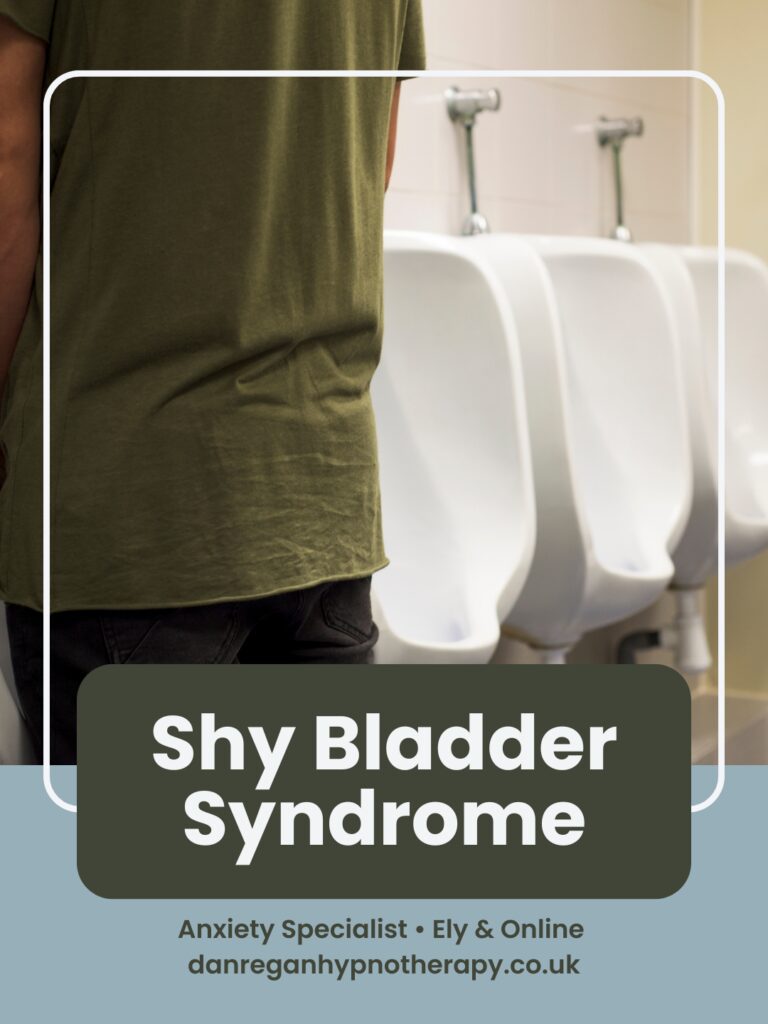
Shy Bladder Syndrome (Paruresis): Why Anxiety Makes It Difficult to Urinate
Have you ever desperately needed to go to the toilet, only to find that the moment somebody else is nearby, nothing happens?
At home you’re completely fine. You don’t even think about urinating. Your body simply does what it naturally knows how to do. If you need to go, you just go.
Yet walk into a busy public toilet, stand at a urinal next to somebody else or hear someone waiting outside the cubicle and suddenly everything changes. Even the possibility of someone else being there may be enough to exacerbate your anxiety.
You know you need to go. You try to go. But the harder you try, the more impossible it seems to become.
This is shy bladder syndrome, also known as paruresis, and it’s an anxiety-related problem that can make it difficult or sometimes impossible to urinate when other people are nearby.
I’ve helped many people with shy bladder syndrome through my anxiety and hypnotherapy work in Ely and Newmarket. Although the details vary, there’s one pattern I notice again and again.
The problem isn’t only what happens when you’re there in the toilet. It’s also everything that starts happening in your mind before you even get there.
- “What if I need the toilet?”
- “What if somebody else is there?”
- “What if I can’t go?”
- “What if they notice I’m taking ages?”
- “What if I’m stuck somewhere and can’t find an empty toilet?”
By the time you actually need to urinate, your body may already be tense and your mind is overthinking and monitoring everything that’s happening.
When you are in a social setting, you may find yourself watching to check if the toilet is likely to be empty of other people or checking the toilet locations beforehand. You may have started avoiding some places or events just in case it happens.
Something that should happen naturally and automatically has become something you feel you have to make happen. And that’s often when it becomes even harder.
The encouraging news is that once you understand shy bladder as an anxiety pattern rather than something mysterious or embarrassing, you can begin changing the thoughts, feelings and behaviours that keep it going.
Quick Summary
Shy bladder syndrome, or paruresis, is an anxiety-related difficulty urinating when other people are nearby, despite being physically able to urinate normally when you feel comfortable and private. Despite its name, it is more an anxiety issue than a bladder issue.
In this article you’ll discover:
- what shy bladder syndrome is
- why anxiety can make it difficult to urinate
- why trying harder can actually make things more difficult
- how fear of being noticed or judged can become part of the problem
- why anticipatory anxiety can start long before you reach the toilet
- how avoidance and safety behaviours can keep the anxiety going
- practical ways to begin changing the pattern
- how hypnotherapy can help with shy bladder anxiety
One of the biggest turning points is recognising that urinating is something your body already knows how to do.
The aim isn’t to learn how to urinate.
It’s to reduce the anxiety and pressure that’s getting in the way of something that normally happens automatically.
Related Anxiety Resources
- Anxiety Support Hub
- Social Anxiety Hypnotherapy in Ely & Newmarket
- Anxiety and Avoidance
- How to Calm Anxiety in the Moment
- Physical Anxiety Symptoms
- Hypnotherapy Reviews in Ely
I was recently asked by Gay Times to contribute to an article exploring why public urinals can cause so much anxiety for some gay men. I discussed how shy bladder (paruresis) can often be understood as part of a wider pattern of social anxiety – including anticipatory worry, becoming very aware of other people around you and the cycle of avoidance that can keep the anxiety going. You can read the Gay Times article here.
What Is Shy Bladder Syndrome?
Shy bladder syndrome is the common name for paruresis. If you have paruresis, you may find it difficult or impossible to urinate when other people are nearby, despite being able to go normally when you feel relaxed and you are in private.
For some people it’s relatively mild. Perhaps you struggle to use a urinal if somebody stands next to you but can use a cubicle without difficulty.
For other people, even knowing somebody is elsewhere in the toilet can be enough to trigger anxiety.
You may struggle if:
- somebody is using the next urinal
- other people are talking nearby
- somebody enters the toilet while you’re trying to go
- you can hear someone outside your cubicle
- you think somebody is waiting for you
- the toilet is particularly quiet
- you’re worried somebody might hear you
- there’s a queue
- you feel rushed
- you know you can’t easily find another toilet
At the more severe end, people can start organising significant parts of their lives around being able to use a toilet safely. You might check toilet locations before going somewhere, avoid busy toilets, wait until everybody has left or only use particular toilets where you know you’ll have enough privacy.
You may even avoid journeys, days out, work events, social occasions or other situations because you’re worried about what will happen if you need the toilet.
What started as difficulty urinating has now become a much wider pattern of anxiety.
Why Does Anxiety Make It Difficult to Urinate?
There’s an important clue in something many people with shy bladder tell me: “When I’m at home on my own, I’m absolutely fine.”
If you’re relaxed and feel safe, you don’t stand in your bathroom analysing whether you’ll be able to urinate. You simply go.
Paruresis is different because a situation that would normally be completely ordinary has become associated with anxiety, pressure and threat.
Your mind might be thinking:
- “Someone’s standing next to me.”
- “I need to go quickly.”
- “Why isn’t anything happening?”
- “They’re going to wonder what I’m doing.”
- “Come on. Just go.”
Now you’re no longer relaxed.
You’re trying. You’re monitoring. You’re waiting. And you’re becoming increasingly anxious about the fact that nothing is happening and that someone may notice.
When your brain perceives a threat, your nervous system changes the way your body is functioning. Your muscles tense and your body prepares to deal with whatever danger it believes is present.
That is useful when you genuinely need to react to danger. But it’s much less useful when you’re standing at a urinal desperately thinking: “Why can’t I pee?”
The more pressure you put on yourself, the less relaxed you become. And the less relaxed you become, the more difficult it can feel. It can feel frustrating because you know it’s just an ordinary, normal thing that shouldn’t be a problem.
Paruresis is recognised as an anxiety-related condition in which anxiety and tension can interfere with being able to urinate in particular situations.
The More You Try, The Harder It Can Become
Imagine I told you: “You absolutely MUST fall asleep in the next two minutes.”
How relaxed would you feel?
You’d probably immediately start checking:
- “Am I falling asleep?”
- “Why am I still awake?”
- “How long have I got?”
The very act of trying hard to force something that normally happens naturally gets in the way.
Something similar can happen with shy bladder.
You stand there thinking:
- “Go.”
- “Come on.”
- “Why isn’t anything happening?”
- “The person next to me is nearly finished.”
- “They’re going to notice.”
Now you’re putting yourself under enormous pressure to perform an automatic bodily function. And every second that passes seems to increase that pressure. You try to force something when what you really need to do is relax and let your body do what it already knows how to do.
This is one of the reasons I tend to approach shy bladder primarily as an anxiety problem.
Your body already knows how to urinate – it’s what you do at home on your own.
We need to change what’s happening with the anxiety surrounding it.
Why Shy Bladder Can Become a Cycle
Like many anxiety problems, paruresis can become self-reinforcing.
It might look something like this:
- You need the toilet.
- You notice other people are there.
- You think:
- “What if I can’t go?”
- Your anxiety increases.
- You become more physically tense.
- You try harder to urinate.
- Nothing happens.
- You become even more aware of the person beside you.
- You think:
- “They must be wondering why I’m still standing here.”
- Your anxiety increases again and you try even harder to make something happen.
- Eventually you leave without going.
And what happens next?
Perhaps at first, relief. You’re no longer trapped in the situation. Perhaps you also feel a little disappointed that it has happened again.
More importantly, your anxious mind can learn something from that experience: “That was awful. I couldn’t go. I need to make sure that doesn’t happen again.”
So the next time you need to use a public toilet, you’re already expecting difficulty. The anxiety starts earlier. And the cycle becomes stronger.
Anticipatory Anxiety Can Become the Bigger Problem
For many people I’ve worked with, shy bladder stops being something that only happens inside public toilets.
The anxiety cycle begins long before then.
- You might be getting ready for a night out and already thinking about the toilets.
- You could be driving somewhere wondering where you’ll be able to stop.
- You may be sitting in a restaurant thinking: “I’m going to need the toilet soon.”
- Or perhaps you’re planning a journey and checking service stations and toilet locations before you’ve even left home.
Your mind starts trying to solve a problem that hasn’t happened yet.
- “What if the toilets are busy?”
- “What if there aren’t cubicles?”
- “What if somebody comes in?”
- “What if I can’t go and then we’re travelling for another two hours?”
Your body responds to what you’re imagining. So you can arrive at the toilet already anxious about something you desperately don’t want to happen.
And because you’re anxious, the very thing you feared becomes more likely.
This is anticipatory anxiety.
You aren’t simply anxious because you can’t urinate. You’re anxious about the possibility that you might not be able to urinate.
The Social Anxiety Side of Shy Bladder
There’s another important part of paruresis that can easily be overlooked.
For many people, it’s also about other people and what they may think.
You might worry:
- What if they notice I can’t go?
- What if they wonder why I’m taking so long?
- What if they can hear that nothing is happening?
- What if somebody thinks I’m strange?
- What if somebody speaks to me?
- What if they’re waiting for me?
You’re no longer simply trying to use the toilet. You’re also monitoring yourself through what you imagine somebody else might be thinking about you.
That’s something I recognise from many other forms of social anxiety.
The more you focus on how you appear to other people, the more self-conscious you become. And the more self-conscious you become, the harder it is to relax and allow your body to do something naturally.
You worry that there might be people in the toilet when you go in or that someone may come in while you are trying to go. If someone is there you worry about them noticing you and judging you. You may even wonder afterwards if they did notice and they are now thinking or talking about you.
Socialising can make this particularly difficult. If you’re in a pub, restaurant, club, at an event or somewhere unfamiliar, you may already know that at some point you’re going to need to use a public toilet. Instead of enjoying yourself, part of your attention can become focused on when you’ll need to go, how busy the toilets might be and whether you’ll be able to urinate when you get there. That anticipation can mean the anxiety begins long before you actually enter the toilet. Instead of relaxing and enjoying yourself, the whole event is dominated by anxiety, tension and thinking the worst.
Avoidance Can Quietly Make Shy Bladder Worse
Once you’ve had several uncomfortable experiences, it makes complete sense to try to prevent them happening again.
You might:
- avoid urinals and always use cubicles
- wait until everybody leaves
- search for quieter toilets
- go to the toilet at particular times
- avoid drinking before going out
- check where toilets are before travelling
- only visit familiar places
- leave without urinating and try somewhere else
- avoid events where you don’t know the toilet arrangements
- make sure you go at home before leaving
- avoid travelling for long periods
Some of these things may seem like sensible ways of managing the problem. And in the short term, they can work.
If you wait until everybody leaves, you can urinate and your anxiety disappears.
The problem is what your brain potentially learns: “I was only able to go because nobody else was there.” Busy toilets become a threat to avoid.
So next time, you feel as though you need exactly the same conditions to be able to successfully go.
Your safe zone becomes increasingly narrow.
This is the same anxiety and avoidance cycle I see across many different anxiety problems. You get short term relief but the anxiety pattern continues unabated.
What Actually Helps With Shy Bladder Syndrome?
Because paruresis is often maintained by anxiety, anticipation, self-monitoring and avoidance, it helps to work on the whole pattern rather than simply trying harder to urinate or trying to avoid the situation
1. Calm the Anticipatory Anxiety
Start to calm things before you reach the toilet.
If you’ve already spent twenty minutes imagining yourself being unable to go, you’ve been rehearsing the very experience you don’t want.
Notice when your mind starts predicting: “I won’t be able to go.”
Rather than following that thought and mentally rehearsing everything that could go wrong, recognise it for what it is.
It’s an anxious prediction.
Not a fact.
Bring your attention back to what you’re actually doing rather than continually imagining what might happen later.
2. Calm Your Physical Anxiety
If you notice yourself becoming physically anxious, slow, comfortable breathing can help your nervous system begin to settle.
Don’t turn the breathing into another test: “I’ve done five breaths. Why can’t I go yet?”
That simply creates another performance demand.
Instead, use breathing as one way of reducing your overall physical tension and practice it at other times to become accomplished at calming yourself.
You can learn more in How to Calm Anxiety in the Moment
3. Take Away the Pressure to Perform
The thought: “I absolutely HAVE to urinate now” creates pressure and tension.
Pressure creates more anxiety. And more anxiety makes relaxing harder.
Try to move away from treating each toilet visit as a test of whether you’re “better”.
One difficult attempt doesn’t mean you’ve failed.
And one successful attempt doesn’t mean you now have to prove you can do it perfectly every time.
The aim is to gradually make the whole experience less important and less threatening – just like when you are on your own at home.
4. Stop Trying to Read Other People’s Minds
If somebody is standing beside you, you may become convinced they’re noticing everything you’re doing. It feels like they can sense your struggle and you can convince yourself that they will notice you can’t go.
However, they’re there for exactly the same reason you are – to use the toilet and get on with their day.
They aren’t timing you, analysing you or wondering why you haven’t urinated yet.”
Of all the social situations you may encounter, the urinals are definitley one place where people go and just do their own business. They are not looking around, being curious or thinking about what you are doing.
And even if somebody did notice you were taking longer, that doesn’t mean they would attach the frightening meaning to it that you’re imagining. It would likely barely register with them.
A lot of the pressure comes not from what other people are actually thinking, but from what you imagine they’re thinking.
5. Reduce Avoidance Gradually
The answer isn’t necessarily to walk into the busiest public toilet you can find tomorrow and force yourself to urinate. That would feel overwhelming and simply create more pressure.
Instead, start changing the pattern in manageable steps.
For example, somebody might initially feel comfortable using a public toilet when nobody else is there. The next step might be tolerating somebody being elsewhere in the room. Later it might involve somebody being closer. Eventually it may involve using increasingly busy environments.
The exact steps will depend upon the person and the situations they find difficult. Shy bladder syndrome is a very individual thing. Forget about the harder situations for now and focus on the next smallest positive step you can take.
The important part is that you’re gradually teaching your mind: “I can handle this situation.”
Graduated exposure is one of the approaches commonly used to help people overcome paruresis and other anxiety problems.
6. Change the Meaning of an Unsuccessful Attempt
Suppose you go into a toilet and can’t urinate.
Your anxious mind might immediately say: “See! I knew I couldn’t do it.”
Now you’ve turned one experience into evidence that you have a permanent problem.
Instead, recognise what actually happened.
- You became anxious.
- Your body became tense.
- You didn’t urinate on that occasion.
That’s all.
Don’t spend the next hour replaying it or using it to predict what will happen tomorrow.
The less meaning you attach to an individual experience, the less ammunition you give the anxiety.
What NOT to Do With Shy Bladder Anxiety
Some of the things that feel helpful in the moment can inadvertently strengthen the pattern.
Be careful about:
- constantly checking whether you need the toilet
- repeatedly imagining what will happen if you can’t go
- forcing yourself to urinate
- continually monitoring whether anybody else is nearby
- assuming other people are watching or judging you
- treating every unsuccessful attempt as a setback
- always escaping to the safest possible toilet
- organising more and more of your life around toilet access
- repeatedly testing whether your shy bladder has “gone”
- severely restricting fluids simply to avoid needing the toilet
These are understandable attempts to avoid an uncomfortable situation.
But the bigger goal is to become confident that you can handle the situation rather than continually arranging your life so that the anxiety can never be triggered.
What I Notice With Shy Bladder Clients
One of the most important things I explain to people with shy bladder is that we aren’t teaching their bladder how to work.
It already works. That’s why they can urinate perfectly normally when they’re somewhere they feel comfortable.
Instead, we’re looking at everything that changes in their thoughts and feelings when another person enters the picture.
- What are you imagining?
- What are you telling yourself?
- Where is your attention?
- How much pressure are you putting on yourself?
- What are you doing to try to make yourself feel safe?
- What situations have you started avoiding?
For many people, that changes how they think about the entire problem.
Instead of: “There’s something wrong with me. Why can’t I pee?”
it becomes: “My anxiety is interfering with something my body already knows how to do.”
That’s a very different problem to work with.
And it means we can start doing something about the anxiety.
The Good News
Shy bladder can feel incredibly frustrating because logically you know there’s nothing frightening about using a public toilet.
You may have told yourself hundreds of times: “Just relax.”
But anxiety doesn’t disappear simply because you logically know you shouldn’t be anxious.
The good news is that the anxious pattern can change.
- You can learn to reduce the anticipatory worry.
- You can become less focused on what other people might be thinking.
- You can stop putting yourself under enormous pressure to perform.
- And you can gradually become more comfortable using toilets in situations that previously felt impossible.
Eventually, the goal is for using a toilet to become what it should have been all along: something so ordinary that you barely think about it.
Frequently Asked Questions About Shy Bladder Syndrome
What is shy bladder syndrome?
Shy bladder syndrome, also called paruresis, is an anxiety-related condition where you find it difficult or impossible to urinate when other people are nearby, despite being physically able to urinate normally in situations where you feel safe and comfortable.
Is shy bladder a form of anxiety?
Paruresis is commonly regarded as an anxiety-related condition and has strong similarities with social anxiety. The presence or perceived presence of other people can trigger anxiety, self-consciousness and physical tension that makes urination difficult.
Why can I pee at home but not in public toilets?
At home you’re likely to feel safe, private and relaxed, so urination happens automatically. In a public toilet, worrying about other people, being heard, being rushed or being unable to go can activate anxiety and tension, interfering with that natural process.
Why is shy bladder worse at urinals?
Urinals generally provide less privacy than cubicles and other people may be standing very close to you. If you’re worried about being observed, heard or judged, that closeness can increase self-consciousness and anxiety.
Can women have shy bladder syndrome?
Yes. Although the difficulty men can experience at urinals is an obvious example, paruresis isn’t exclusively a male problem. Anxiety can make it difficult to urinate in a cubicle or other toilet whenever someone feels insufficiently private or worries about other people being nearby.
Why does trying harder to pee make it worse?
Trying to force urination can increase pressure, tension and self-monitoring. Instead of allowing an automatic process to happen, you become increasingly focused on whether it is happening yet. This can increase anxiety and make relaxing more difficult.
Can shy bladder make me avoid going out?
Yes. Some people begin avoiding travel, social situations, work activities and unfamiliar places because they’re worried about needing to use a public toilet. This avoidance can provide immediate relief but can also strengthen the anxiety pattern over time.
Should I stop avoiding public toilets completely?
You don’t necessarily need to throw yourself immediately into the situation you find most difficult. A gradual approach can be more manageable, progressively becoming comfortable in situations that previously triggered anxiety. Graduated exposure is an established treatment approach for paruresis.
Can hypnotherapy help with shy bladder?
Hypnotherapy can be used as part of an approach to reducing the anxiety associated with paruresis. My work focuses on helping you become calmer, change anticipatory anxious thinking, reduce self-consciousness and build confidence in situations where you’ve previously struggled.
When should I seek medical advice about difficulty urinating?
Difficulty urinating isn’t always caused by anxiety. Physical conditions and some medications can also cause urinary problems, so new or unexplained difficulty urinating should be medically assessed rather than automatically attributed to shy bladder. If you’re unable to urinate at all despite having a full bladder, particularly for several hours, seek urgent medical help.
Shy Bladder Hypnotherapy in Ely and Newmarket
Shy bladder can affect far more than what happens when you need the toilet.
You may find yourself planning journeys around toilets, turning down social events, worrying before leaving home or continually calculating when and where you’ll next be able to go.
Eventually, you can spend a huge amount of time trying to prevent yourself from ever being in a situation where you might struggle.
Through my anxiety therapy and hypnotherapy work in Ely, Newmarket and online, I help people change the anxious thoughts, feelings and behaviours that have become associated with these situations.
The aim isn’t to teach you how to urinate – your body already knows how to do that.
It’s to help you become calmer and more confident so that anxiety stops getting in the way.
You can learn more here:
- Anxiety Support Hub
- Social Anxiety Hypnotherapy in Ely & Newmarket
- Anxiety Hypnotherapy in Ely
- Hypnotherapy Reviews in Ely
Or arrange a free initial consultation to talk about what’s been happening and what might help.
To your health and happiness,
Dan Regan
Anxiety Therapy and Hypnotherapy in Ely and Newmarket
Get Your Copy Right Now…
Subscribe to Dan’s Digest filled with tips, strategies and techniques and get instant access to your free rapid relaxation hypnosis audio track.
Enjoy feeling and being more mentally calm and physically relaxed right now:


0 Comments